equationzone

General Chemistry

Plane Figure Areas

Complete and detailed cheat sheet with essential formulas for calculating the areas of plane figures. Includes triangles (general, acute, obtuse, equilateral), quadrilaterals (square, rectangle, parallelogram, trapezoid), regular polygons (pentagon, hexagon, octagon), and circular figures (circle, sector, segment, annulus). Each formula is presented with its variables defined and accompanied by illustrative diagrams for correct application. Ideal as study material and for quick reference in geometry courses, basic mathematics, and engineering careers.

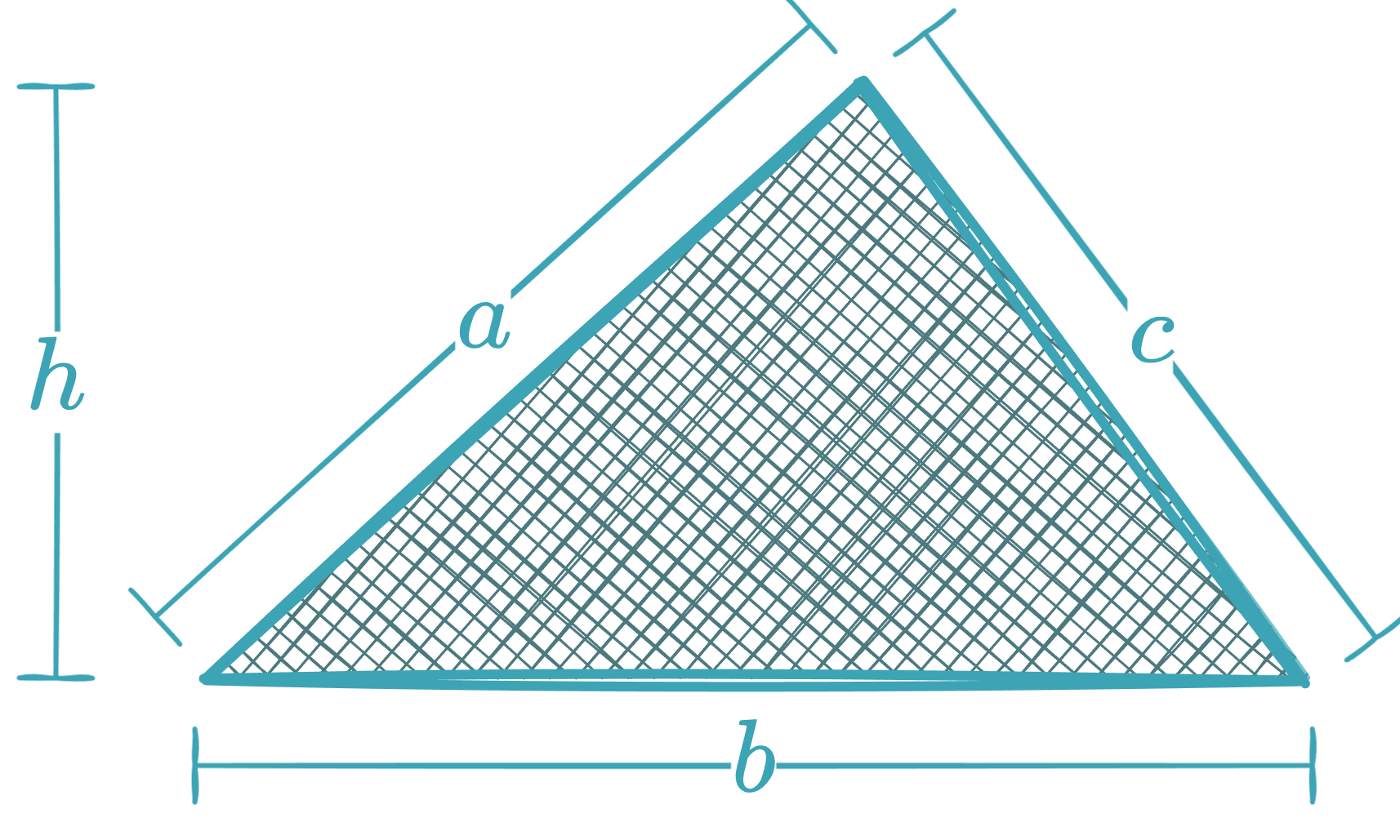
Triangle - equationzone.com

  • General formula (base and height):

    A=bh2A = \frac{b \cdot h}{2}

  • Heron's Formula (sides):

    A=s(sa)(sb)(sc)A = \sqrt{s(s-a)(s-b)(s-c)}

    where s=a+b+c2s = \frac{a + b + c}{2} is the semiperimeter.

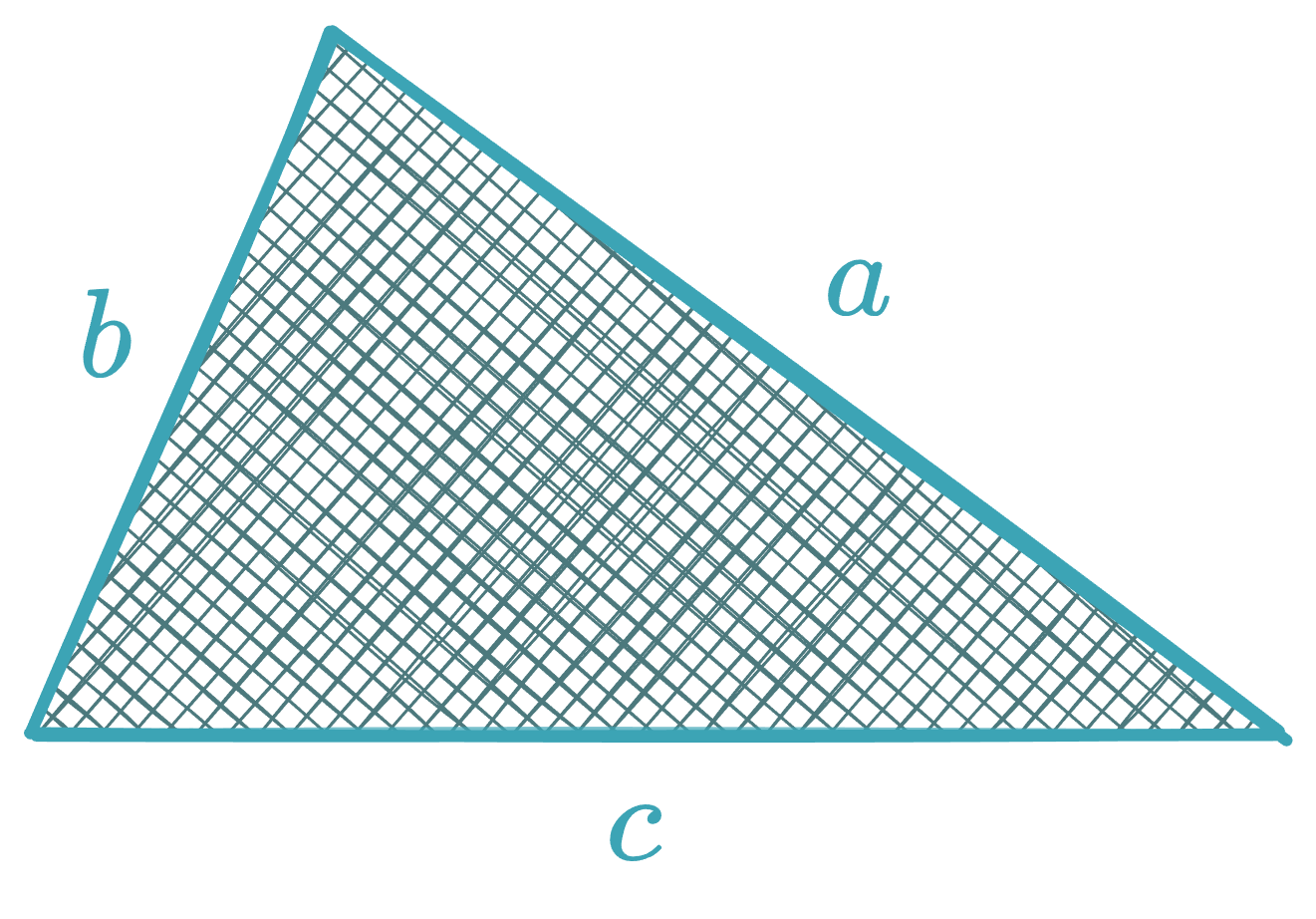
Acute Triangle - equationzone.com

Given two sides (aa, bb) and base cc:

A=c2a2(a2b2+c22c)2A = \frac{c}{2} \sqrt{a^2 - \left( \frac{a^2 - b^2 + c^2}{2c} \right)^2}

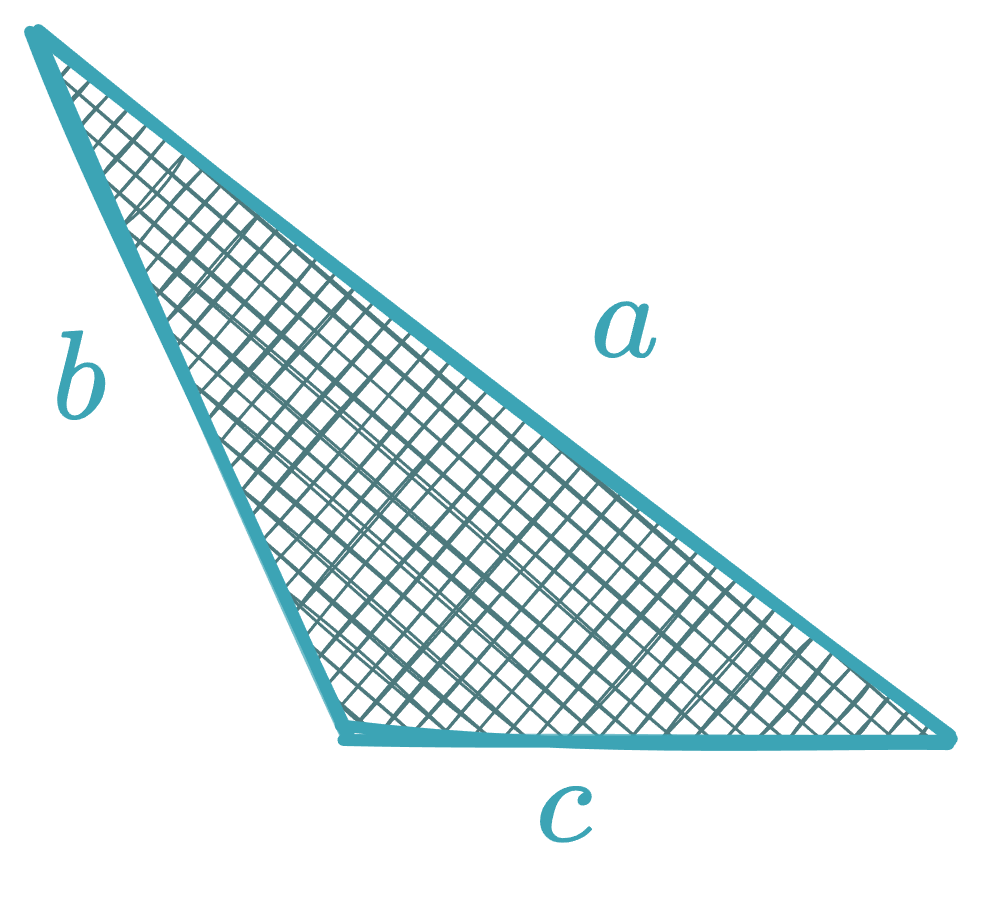
Obtuse Triangle - equationzone.com

Given two sides (aa, bb) and base cc:

A=c2b2(a2b2c22c)2A = \frac{c}{2} \sqrt{b^2 - \left( \frac{a^2 - b^2 - c^2}{2c} \right)^2}

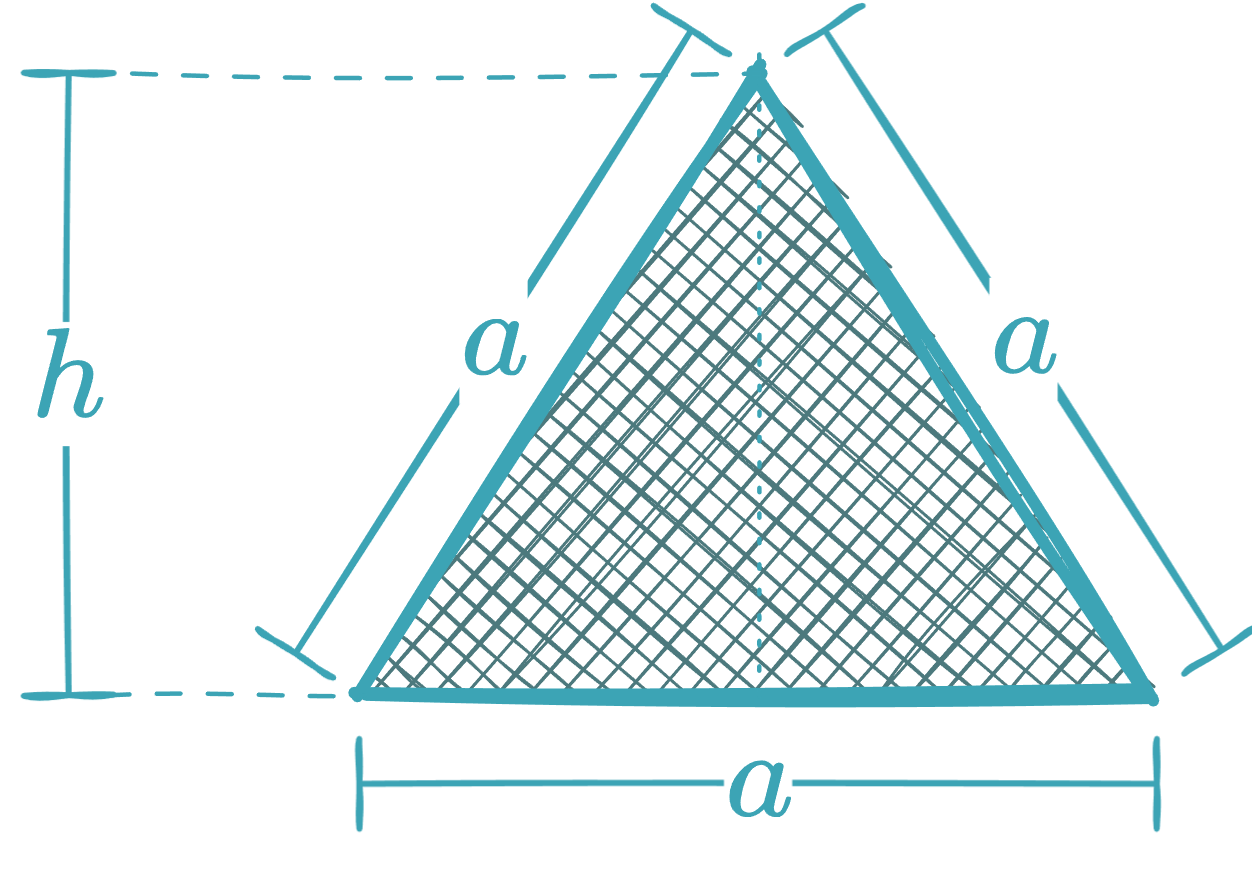
Equilateral Triangle - equationzone.com

  • With side aa and height hh:

    A=ah2A = \frac{a \cdot h}{2}

    h=32ah = \frac{\sqrt{3}}{2} a

  • In terms of side aa:

    A=34a2A = \frac{\sqrt{3}}{4} a^2

  • In terms of height hh:

    A=33h2A = \frac{\sqrt{3}}{3} h^2

Equilateral Triangle - equationzone.com

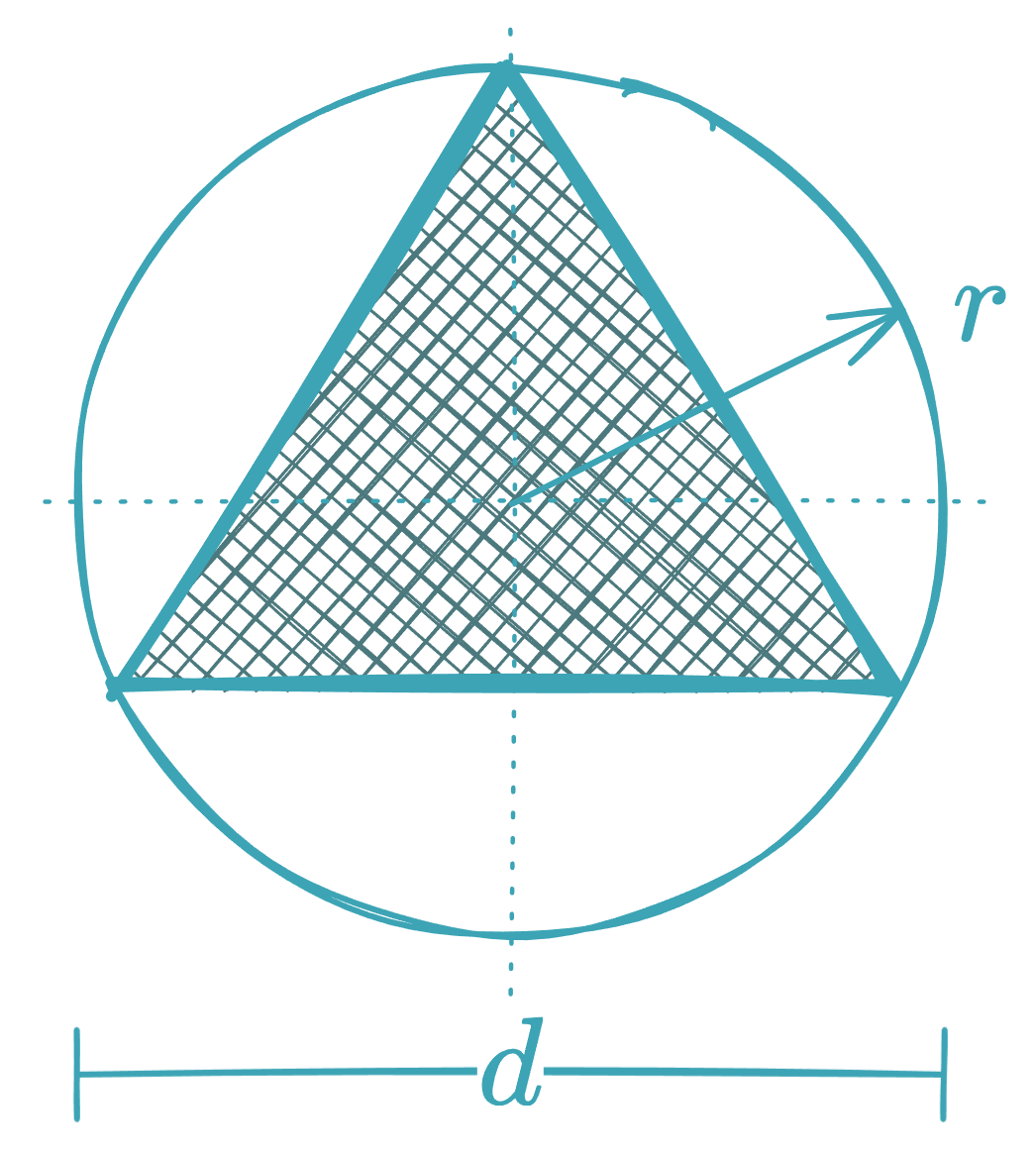
  • In terms of the diameter dd of the circumscribed circle:

    A=3316d2A = \frac{3\sqrt{3}}{16} d^2

  • In terms of the radius rr of the inscribed circle:

    A=334r2A = \frac{3\sqrt{3}}{4} r^2

Square - equationzone.com

  • In terms of side ll:

    A=l2A = l^2

    l=Al = \sqrt{A}

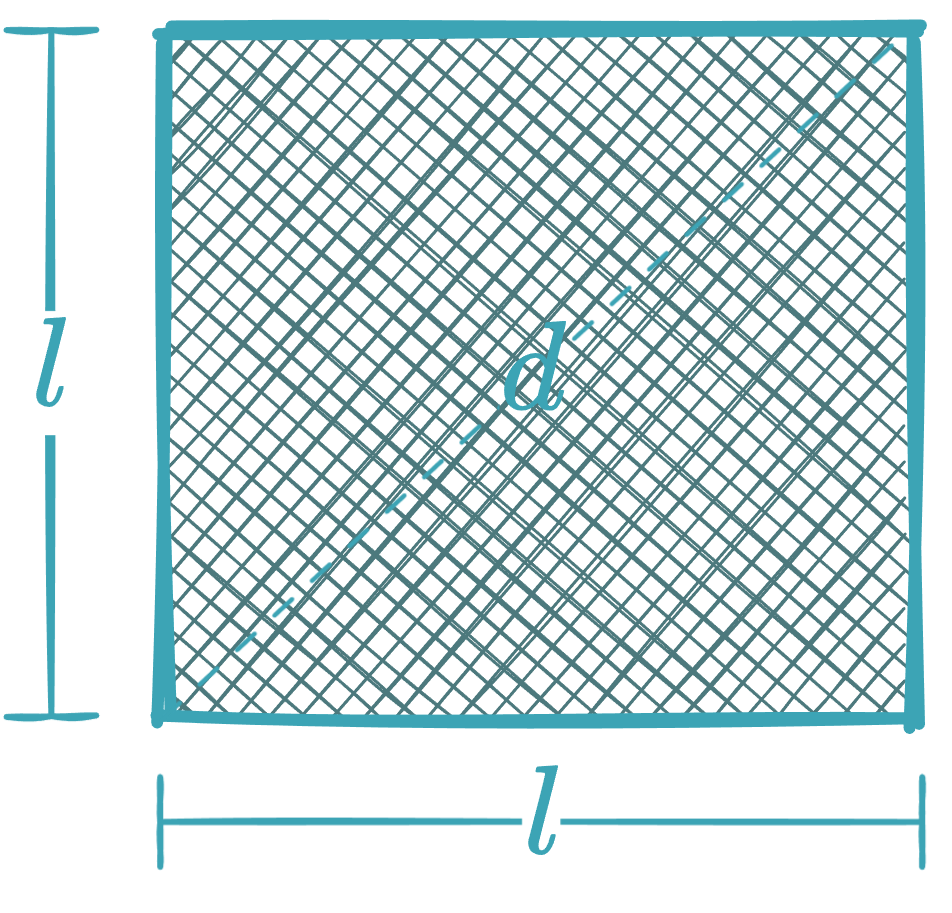
  • In terms of diagonal dd:

    d=l2d = l \cdot \sqrt{2}

    A=d22A = \frac{d^2}{2}

Square - equationzone.com

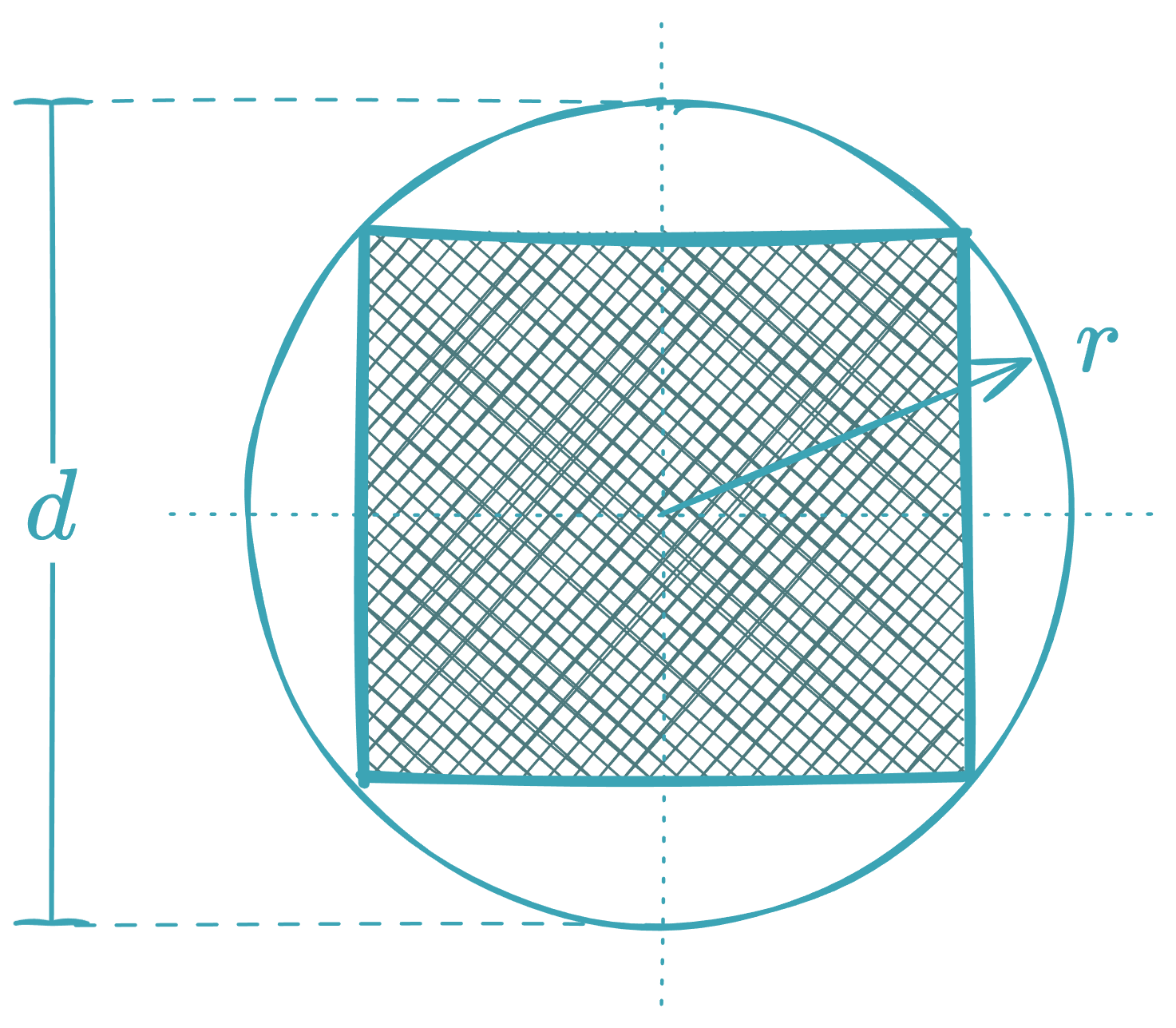
  • In terms of the radius rr of the inscribed circle:

    A=(2r)2=4r2A = (2r)^2 = 4r^2

Rectangle - equationzone.com

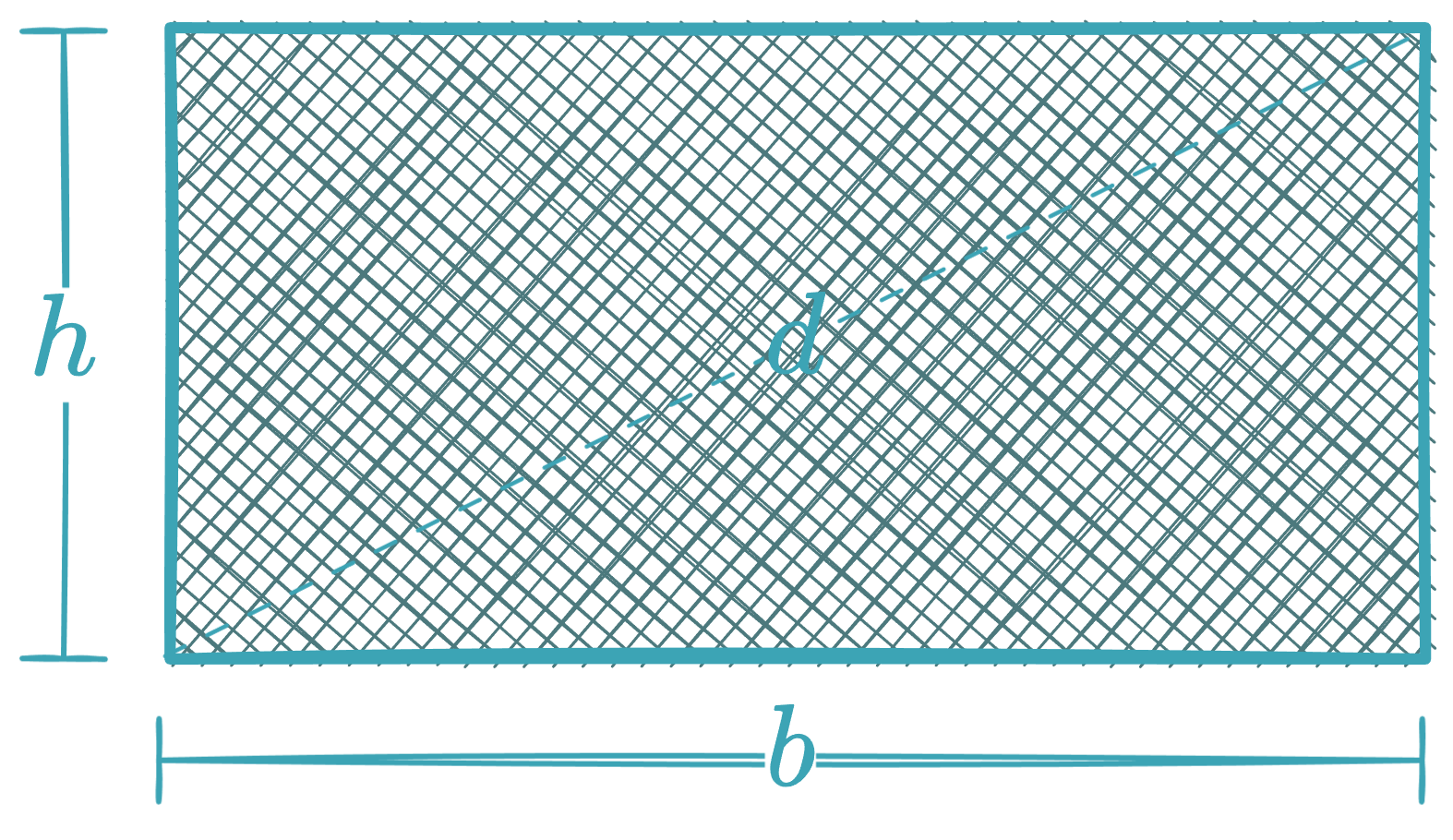
A=bhA = b \cdot h

d=b2+h2d = \sqrt{b^2 + h^2}

(where dd is the diagonal, bb the base and hh the height)

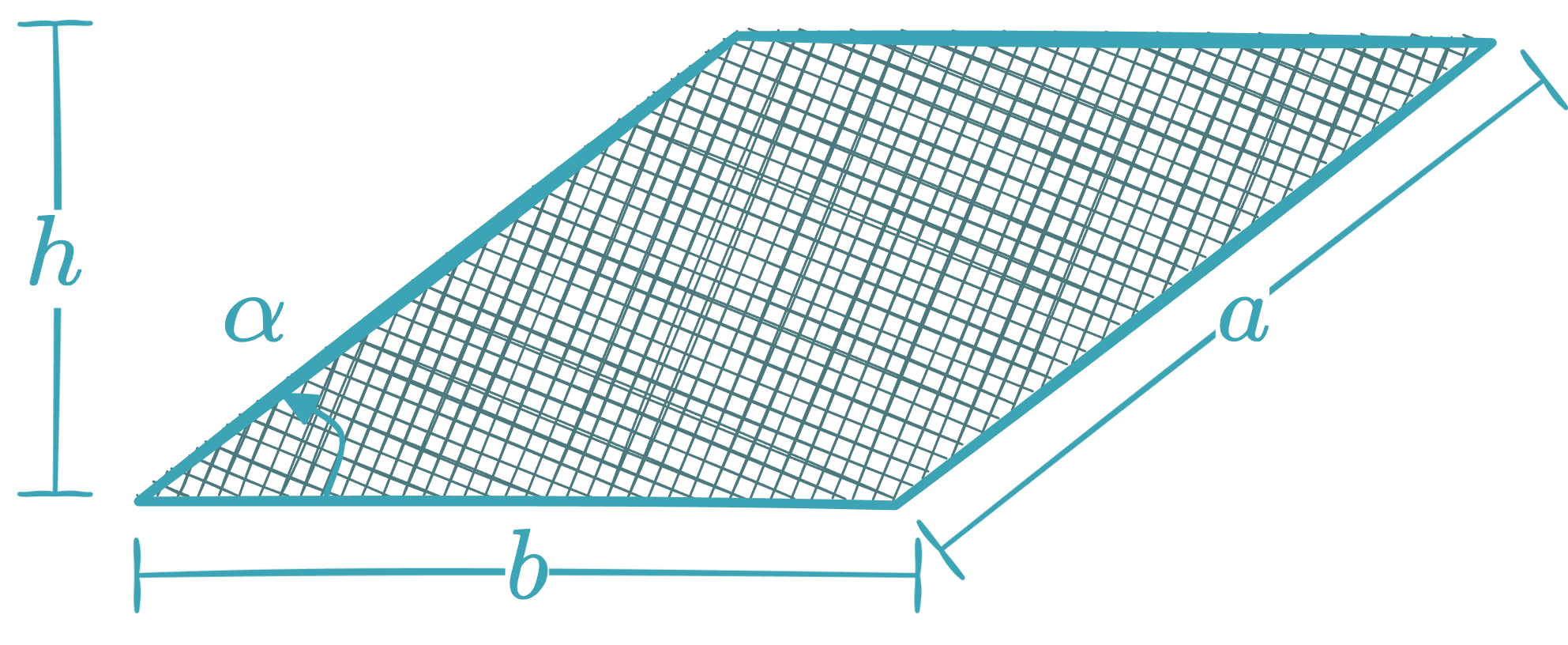
Parallelogram - equationzone.com

  • Area:

    A=bh=absinαA = b \cdot h = a \cdot b \cdot \sin \alpha

  • Diagonals:

    d1=(a+hcotα)2+h2d_1 = \sqrt{(a + h \cot \alpha)^2 + h^2}

    d2=(ahcotα)2+h2d_2 = \sqrt{(a - h \cot \alpha)^2 + h^2}

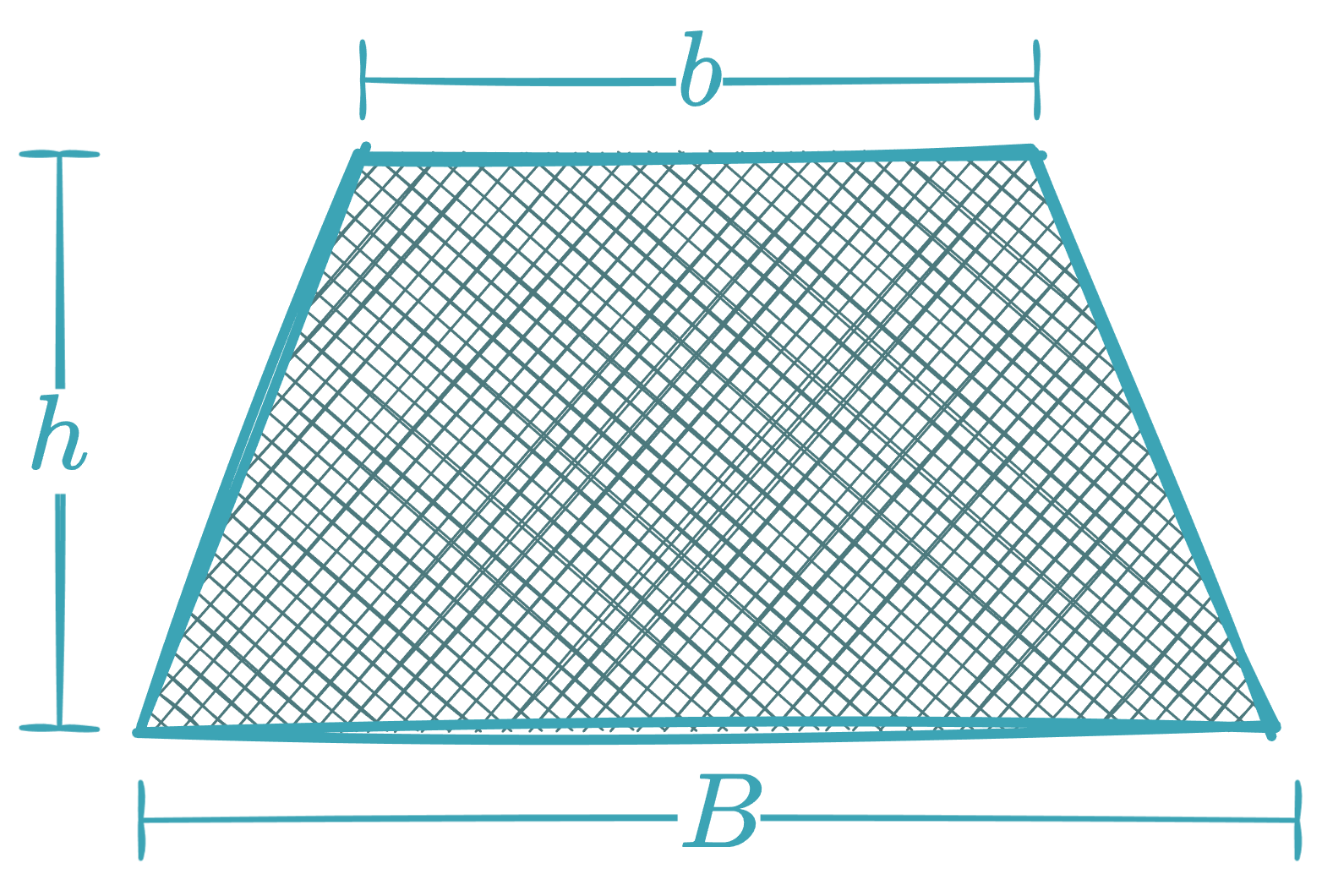
Trapezoid - equationzone.com

  • Area:

    A=(B+b)2h=mhA = \frac{(B + b)}{2} \cdot h = m \cdot h

    (where BB and bb are the bases, hh the height and mm the midline)

  • Midline:

    m=B+b2m = \frac{B + b}{2}

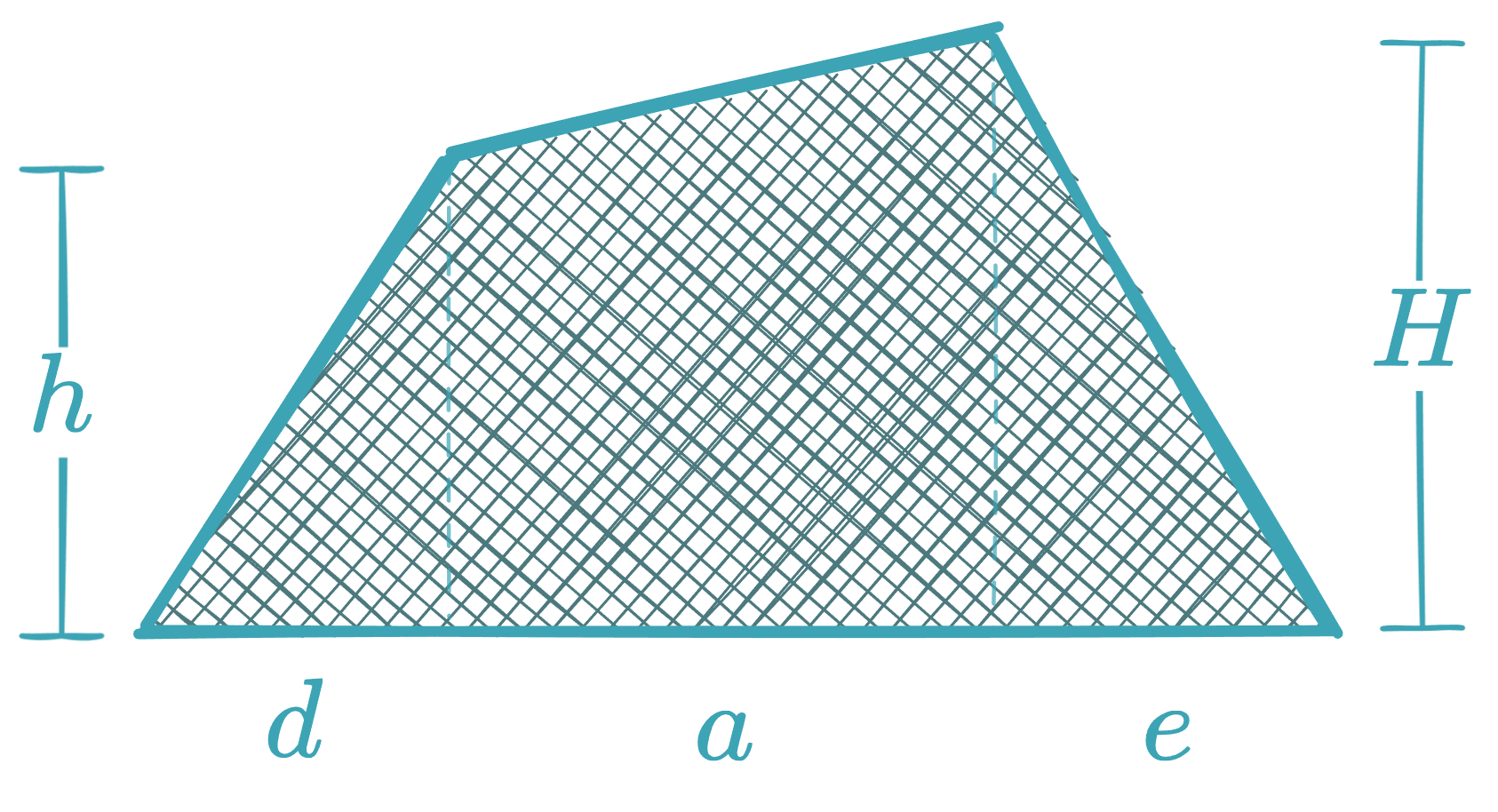
Trapezium / Irregular Quadrilateral

Trapezium - equationzone.com

Can be calculated by dividing it into triangles:

A=a(H+h)+dh+eH2A = \frac{a(H+h)+d \cdot h + e \cdot H}{2}

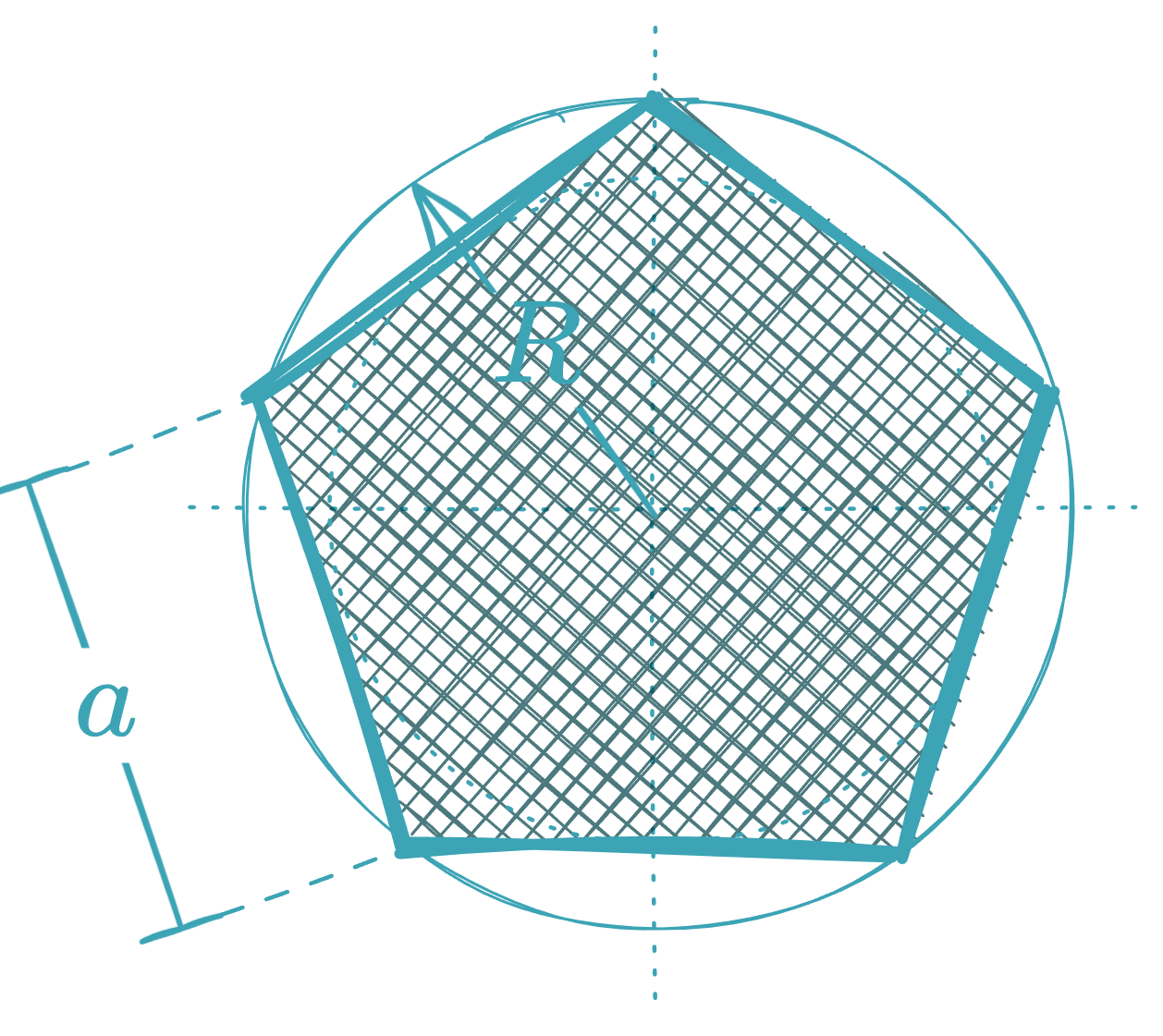
Regular Pentagon - equationzone.com

  • In terms of the radius RR of the circumscribed circle:

    A=58R210+25A = \frac{5}{8} R^2 \cdot \sqrt{10 + 2\sqrt{5}}

    A=52R2sin72A = \frac{5}{2}R^2 \cdot \sin 72^\circ

  • In terms of side aa:

    A=145(5+25)a2A = \frac{1}{4} \sqrt{5(5+2\sqrt{5})} \cdot a^2

  • In terms of the apothem apa_{p}:

    A=5ap2525A = 5a_{p}^2 \cdot \sqrt{5 - 2\sqrt{5}}

    where the apothem is:

    ap=a21+25a_{p}= \frac{a}{2} \cdot \sqrt{1 + \frac{2}{\sqrt{5}}}

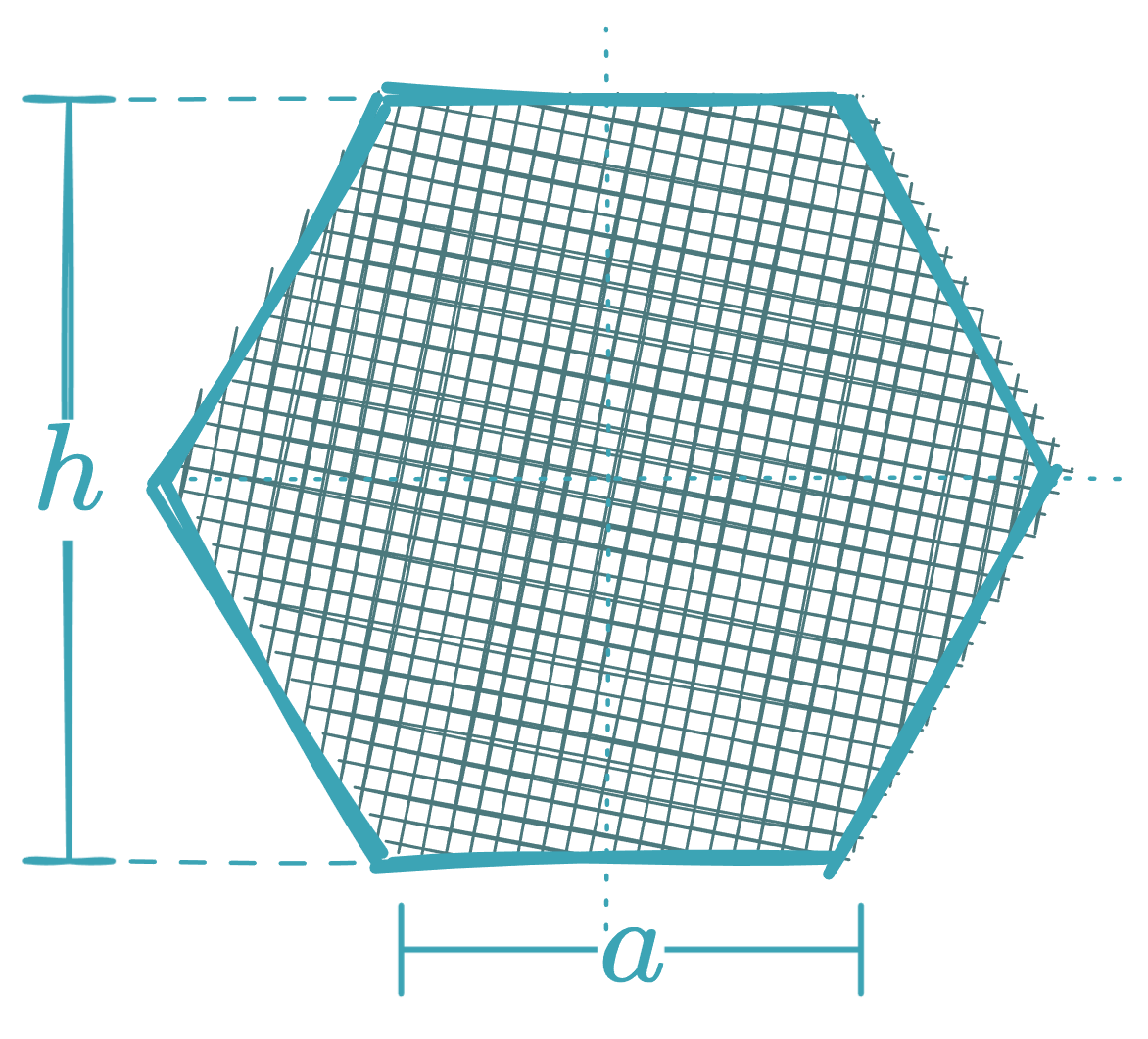
Regular Hexagon - equationzone.com

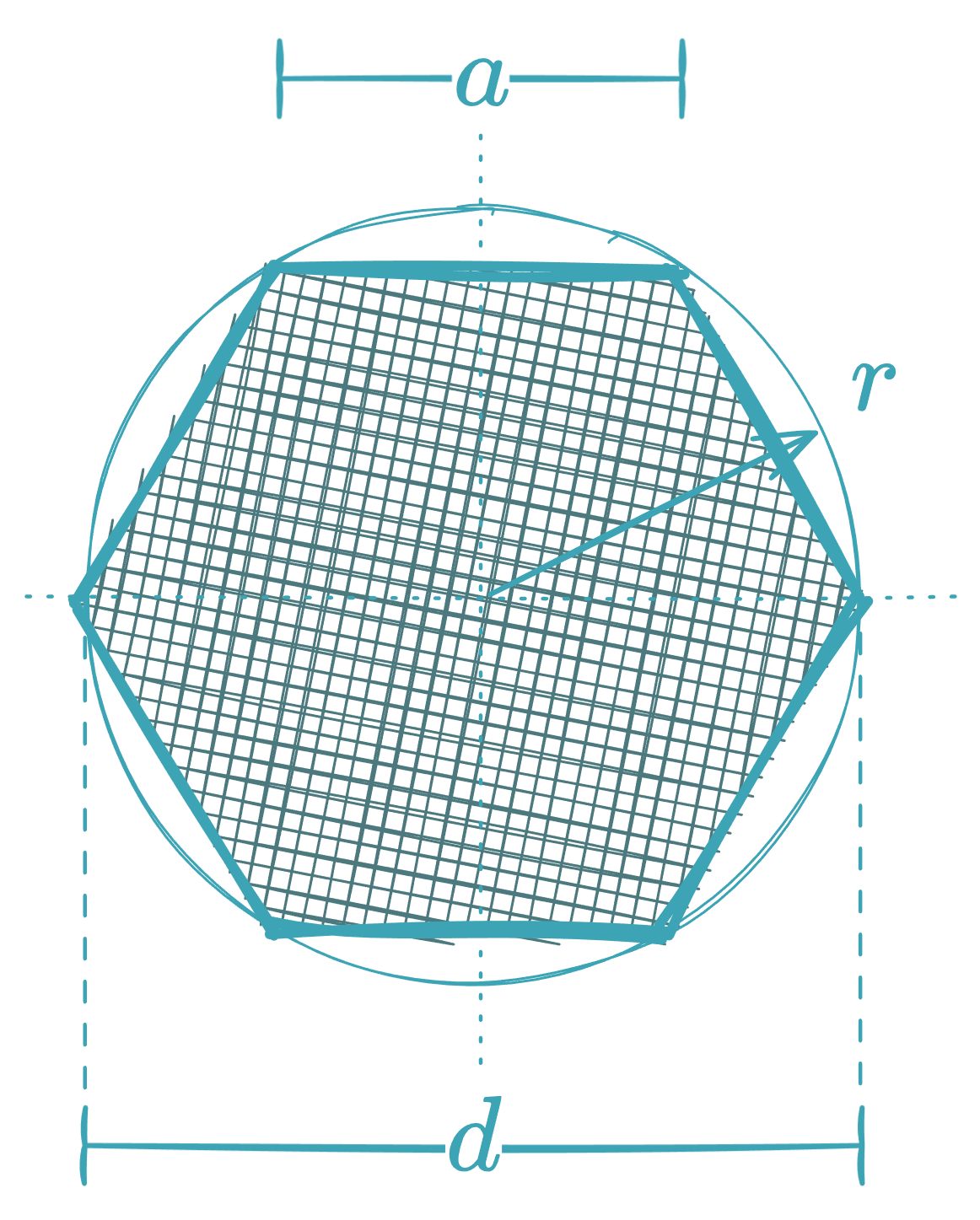
Regular Hexagon - equationzone.com

  • In terms of side aa:

    A=332a2A = \frac{3\sqrt{3}}{2} a^2

  • In terms of the height between parallel sides hh:

    A=32h2A = \frac{\sqrt{3}}{2} h^2

  • In terms of the major diagonal dd:

    A=334d2A = \frac{3\sqrt{3}}{4} d^2

  • Important relations: The side aa is equal to the radius RR of the circumscribed circle: a=Ra = R. The height between parallel sides is: h=3ah = \sqrt{3} \cdot a. The major diagonal is: d=2ad = 2a.

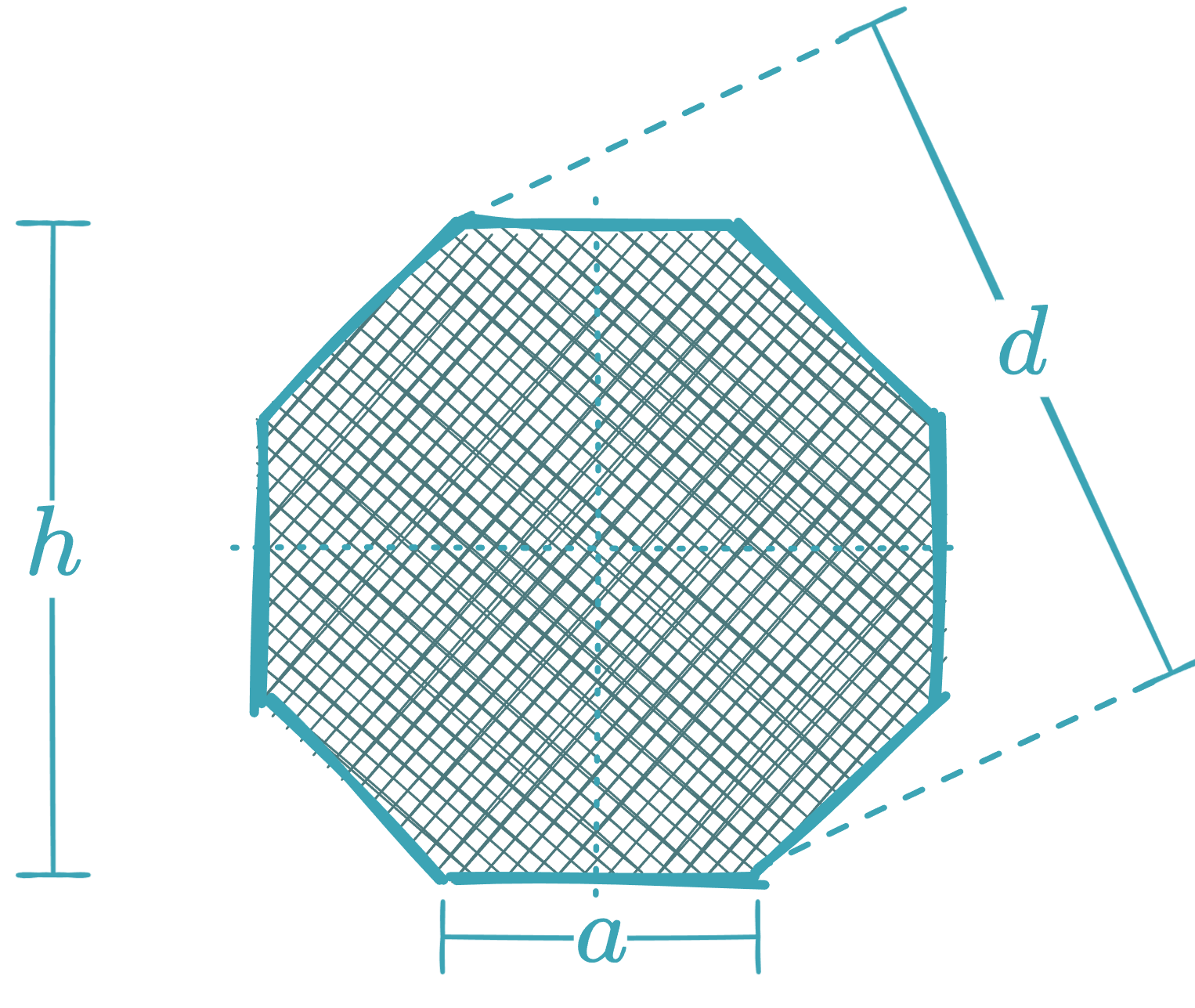
Regular Octagon - equationzone.com

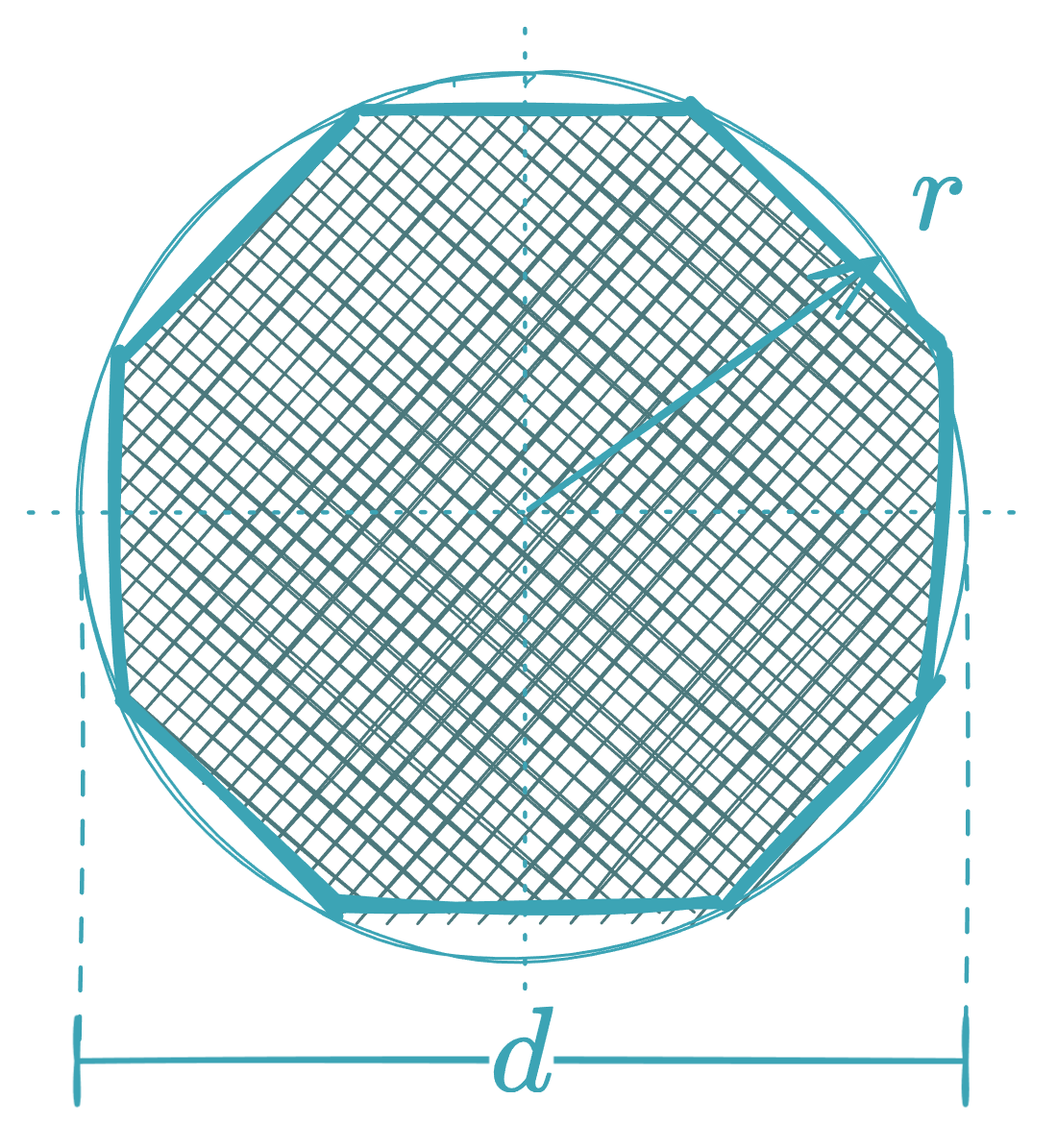
Regular Octagon - equationzone.com

  • Area in terms of side aa and apothem apa_{p}:

    A=Pap2=4aapA = \frac{P \cdot a_{p}}{2} = 4 \cdot a \cdot a_{p}

  • Perimeter:

    P=8aP = 8a

  • Apothem:

    ap=a2cotπ8a_{p} = \frac{a}{2} \cdot \cot \frac{\pi}{8}

  • Common approximate formulas:

    A=8a24tanπ84.828a2A = \frac{8a^2}{4\tan \frac{\pi}{8}} \approx 4.828 \cdot a^2

    A0.828s2A \approx 0.828 \cdot s^2

    (where ss is the width between parallel sides)

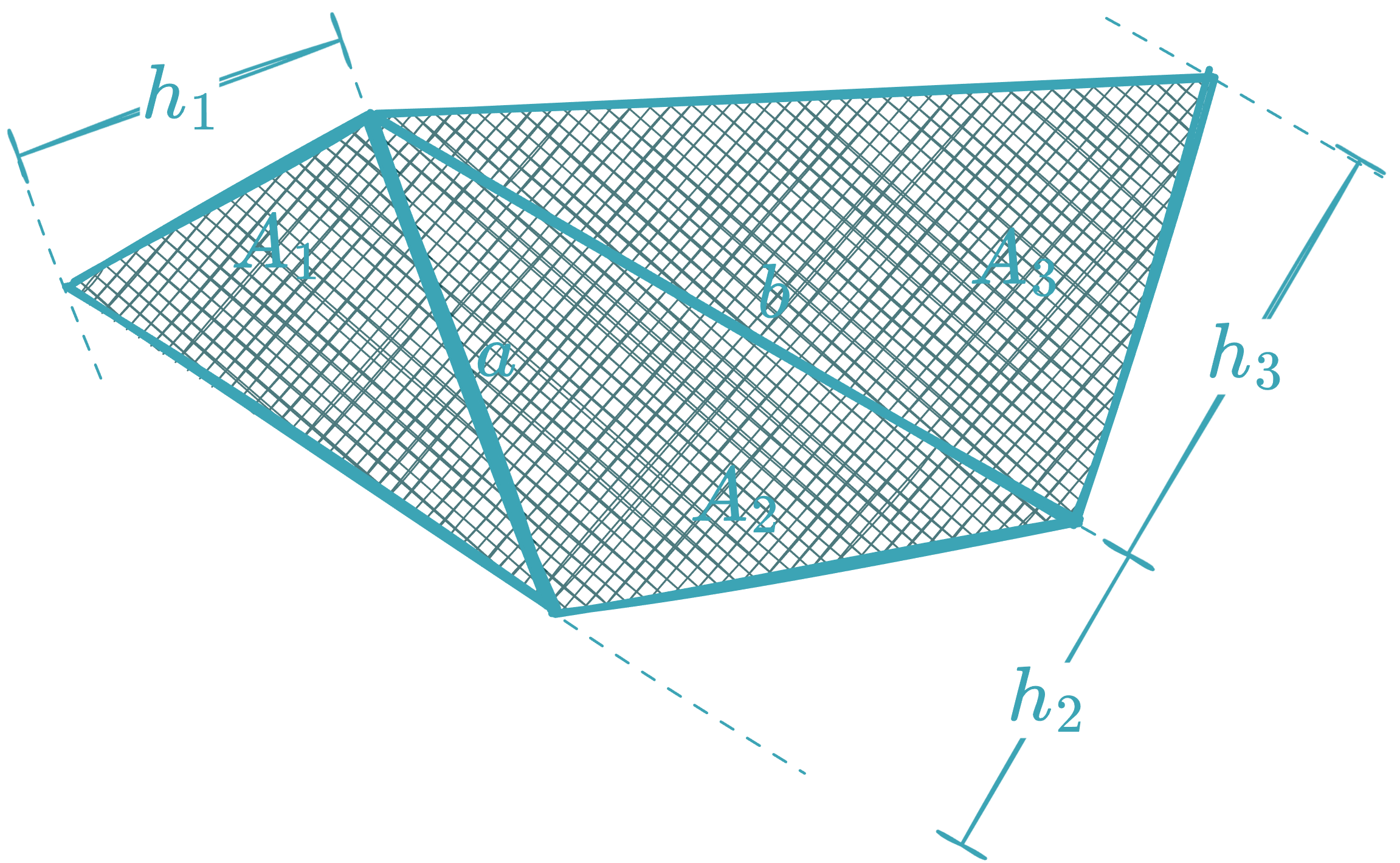
Polygon - equationzone.com

Decomposed into triangles and their areas summed:

Atotal=A1+A2+A3+A_{\text{total}} = A_1 + A_2 + A_3 + \dots

Atotal=ah1+bh2+bh32A_{\text{total}} = \frac{a h_1 + b h_2 + b h_3 \dots}{2}


Area of the Circle and Sections of the Circle

Circle - equationzone.com
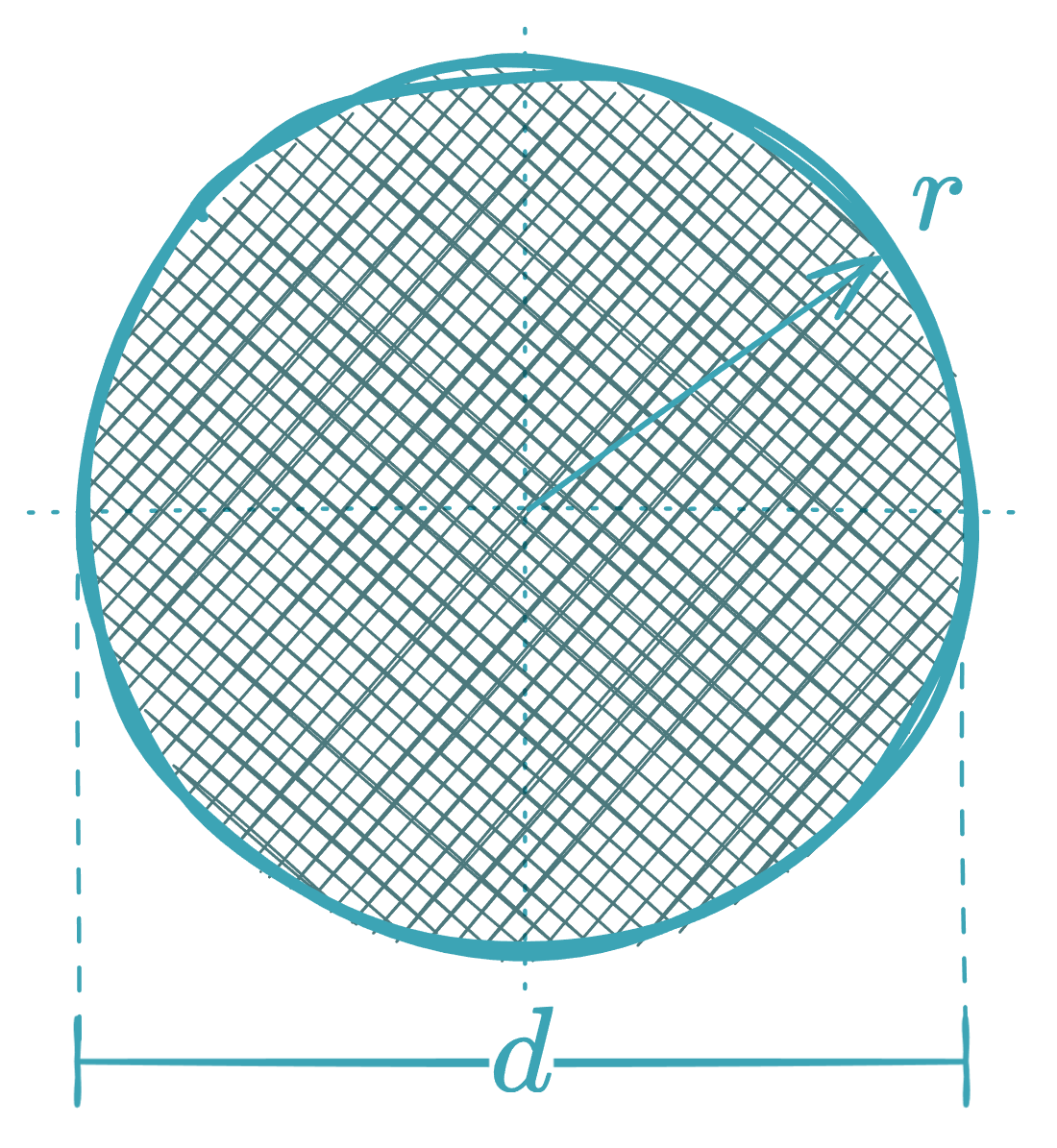
  • Area in terms of diameter dd:

    A=π4d2A = \frac{\pi}{4} d^2

  • Area in terms of radius rr:

    A=πr2A = \pi r^2

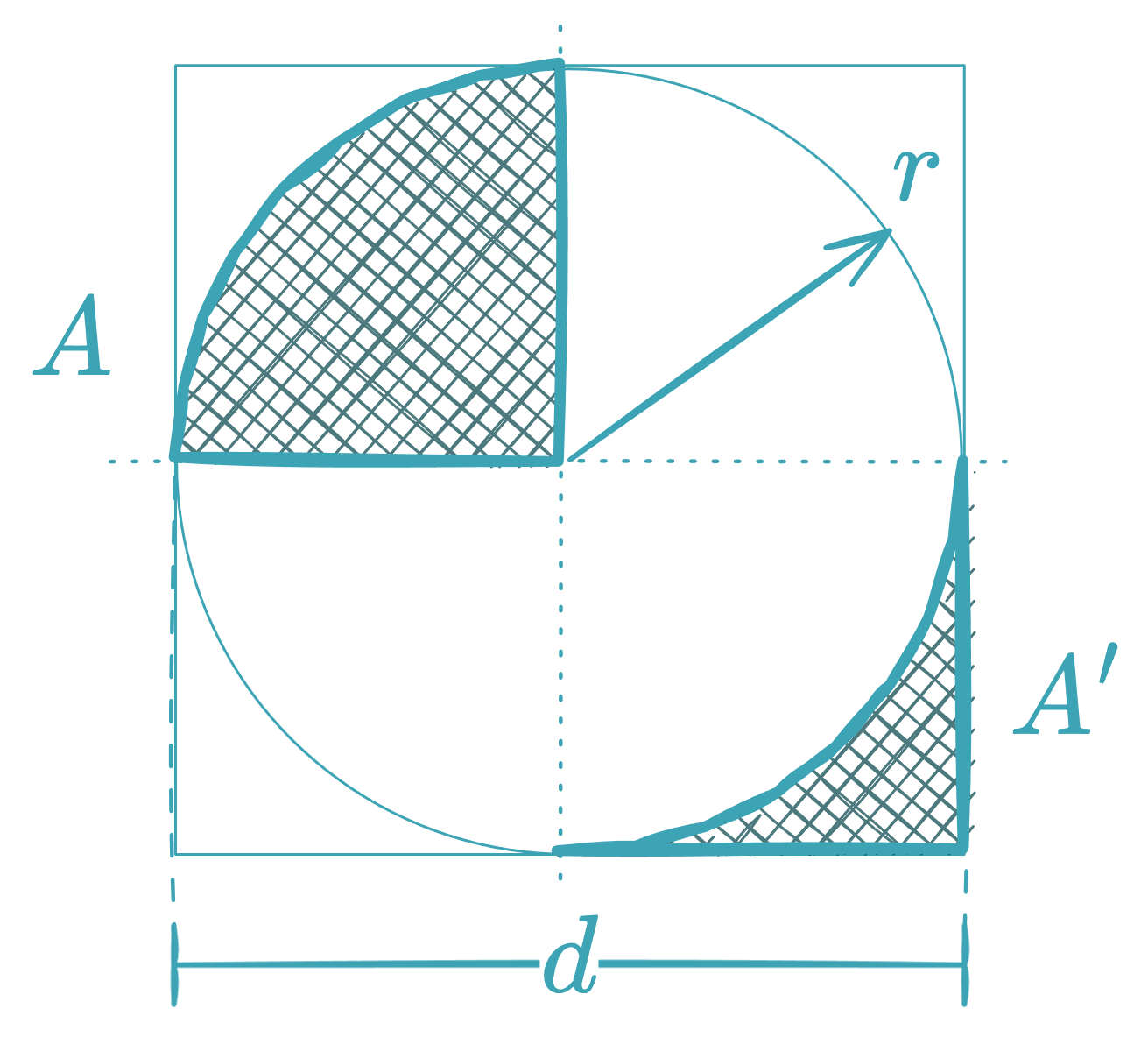
Quadrant and concave triangle - equationzone.com

  • Area of the quadrant:

    A=π16d2A = \frac{\pi}{16} d^2

    A=π4r2A = \frac{\pi}{4} r^2

  • Area of the concave triangle:

    A=(1π4)r2A' = \left(1 - \frac{\pi}{4}\right) r^2

(where rr is the radius and dd the diameter)

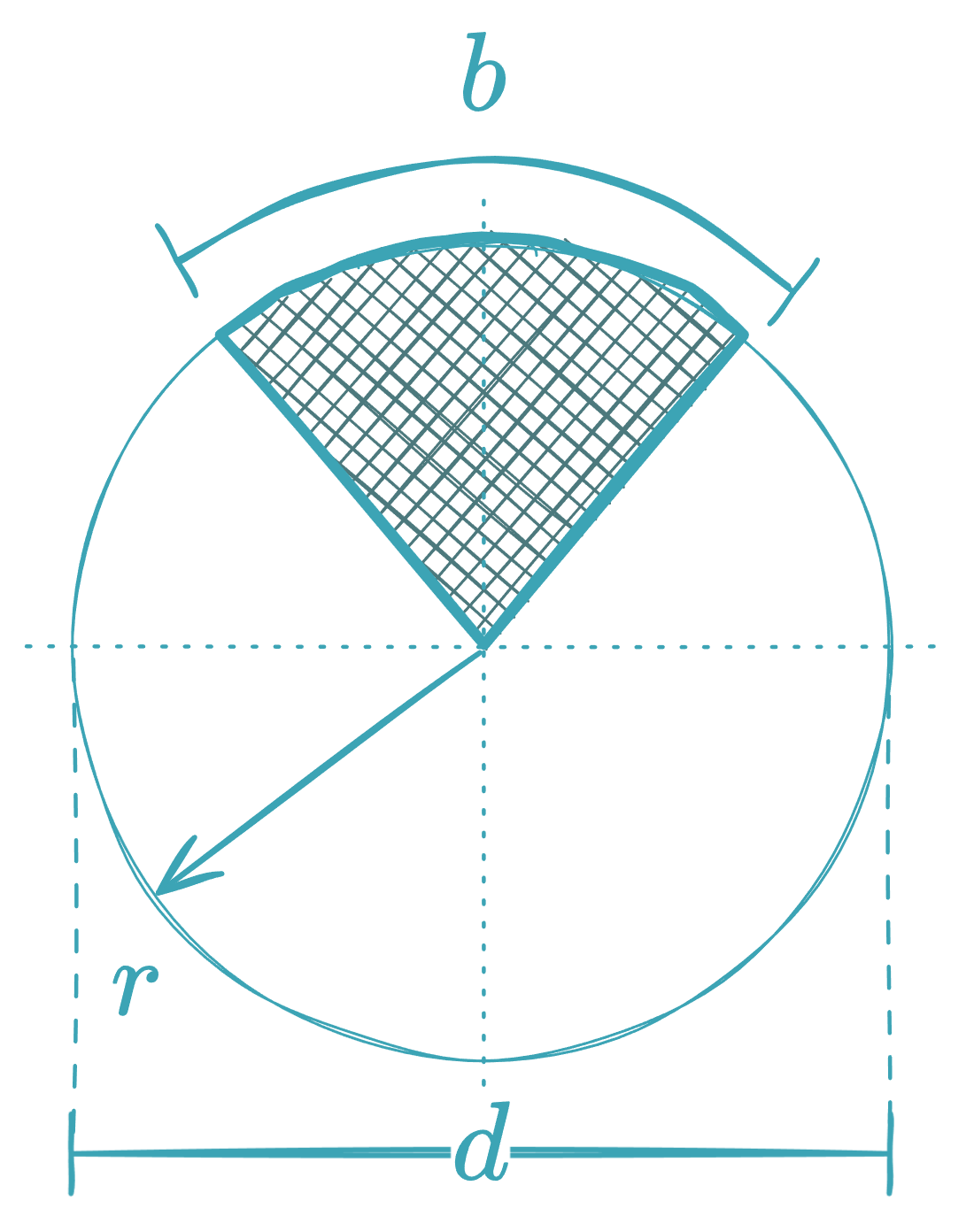
Circular Sector - equationzone.com

  • Area (angle in degrees α\alpha^\circ):

    A=πr2α360A = \frac{\pi r^2 \alpha^\circ}{360^\circ}

  • Area (angle in radians θ\theta):

    A=θ2r2A = \frac{\theta}{2} r^2

  • Arc length LL:

    L=πrα180=θrL = \frac{\pi r \alpha^\circ}{180^\circ} = \theta \cdot r

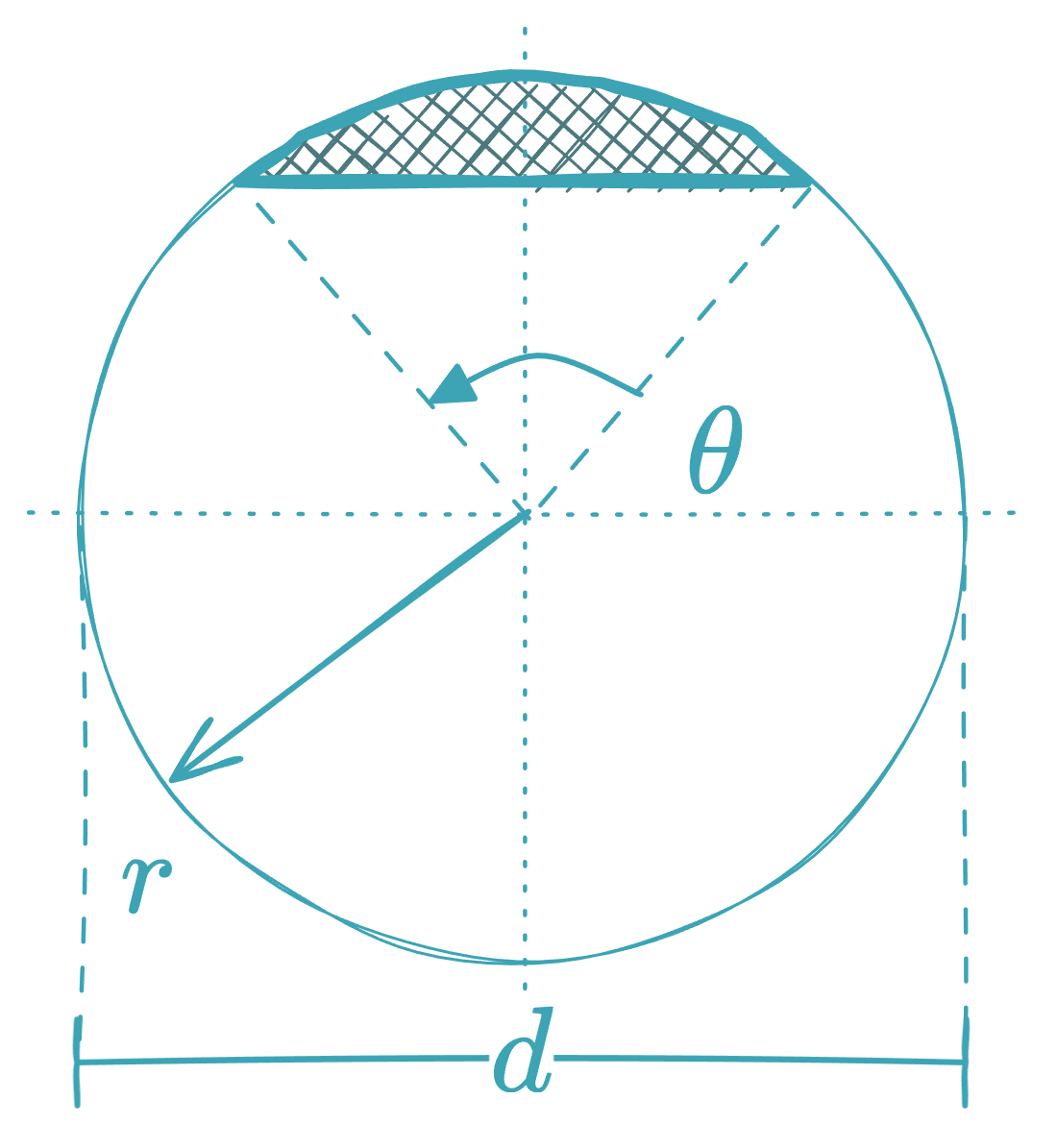
Circular Segment - equationzone.com It is the area between a chord and its arc. Calculated by subtracting the area of the isosceles triangle formed by the radii and the chord from the area of the sector.

A=r22(θsinθ)A = \frac{r^2}{2} (\theta - \sin \theta)

(where θ\theta is in radians)

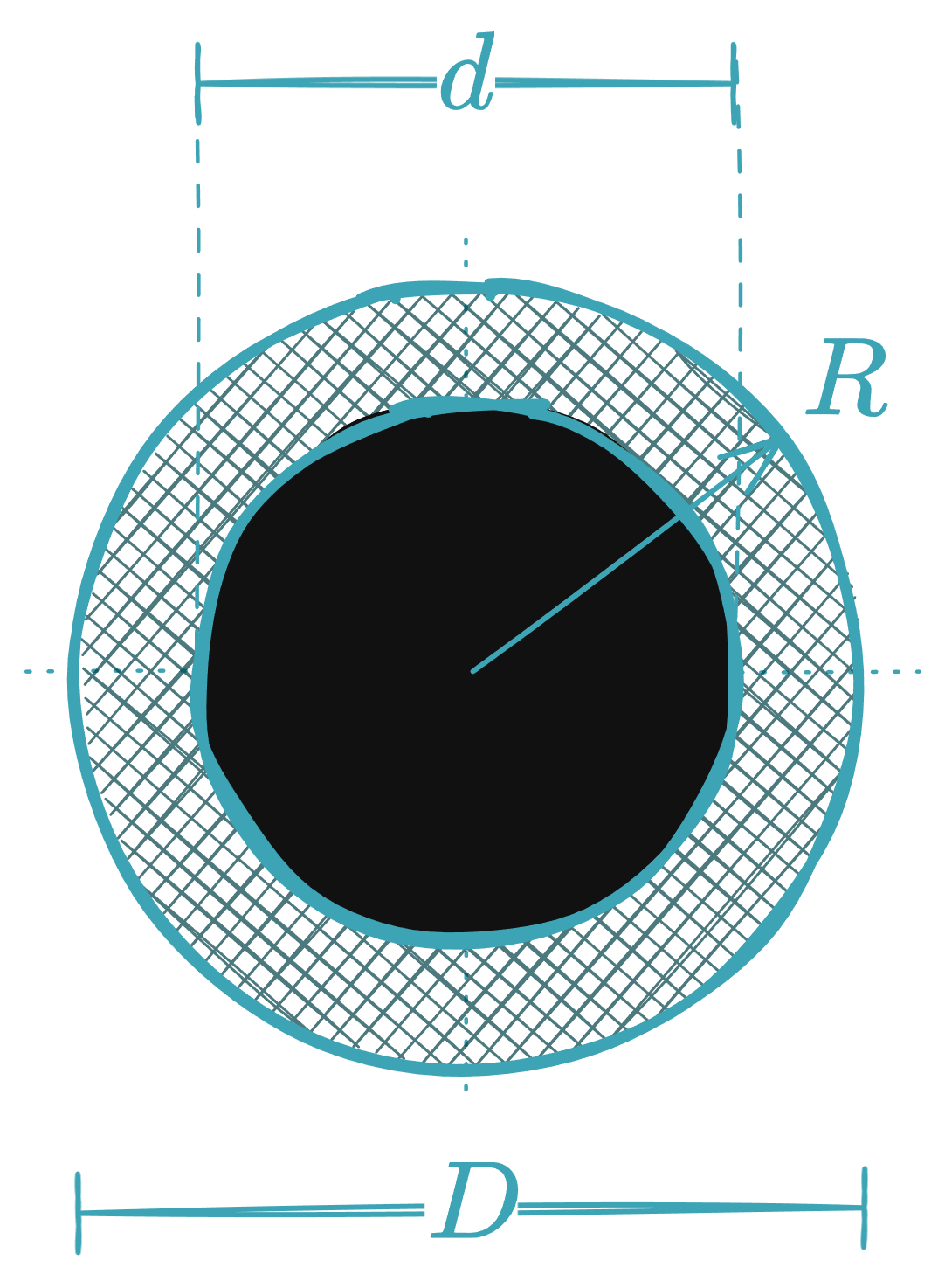
Annulus - equationzone.com

  • Area in terms of diameter:

    A=π4(D2d2)A = \frac{\pi}{4} (D^2 - d^2)

  • Area in terms of radius:

    A=π(R2r2)A = \pi (R^2 - r^2)

(where RR and rr are the radii, DD and dd the diameters)

Annular Sector (Circular Trapezoid)
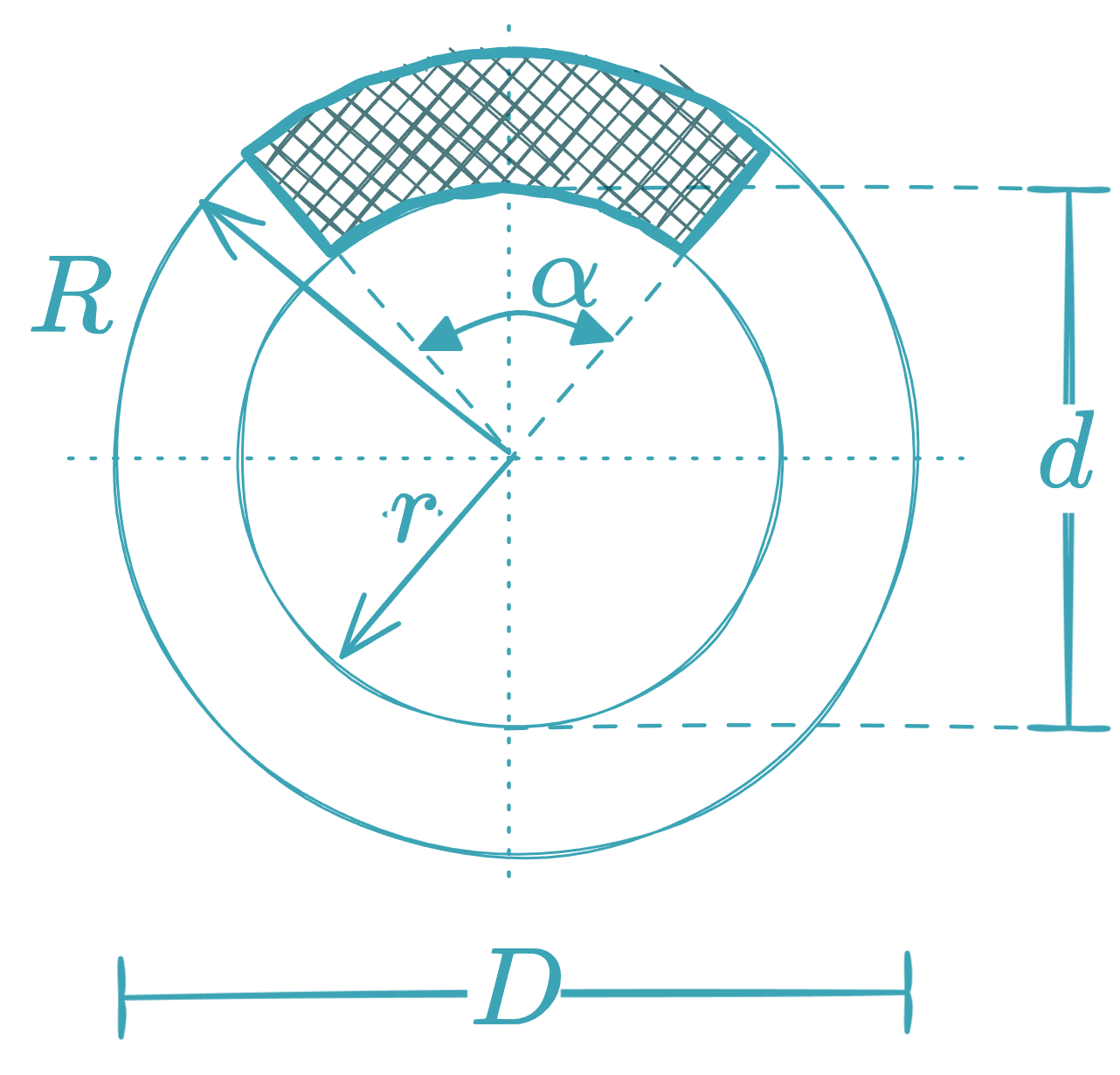
Annular sector - equationzone.com

  • Area (angle in degrees α\alpha^\circ):

    A=πα4360(D2d2)A = \frac{\pi \cdot \alpha^\circ}{4 \cdot 360^\circ} (D^2 - d^2)

    A=πα360(R2r2)A = \frac{\pi \alpha^\circ}{360^\circ} (R^2 - r^2)

  • Area (angle in radians θ\theta):

    A=θ8(D2d2)A = \frac{\theta}{8} (D^2 - d^2)

    A=θ2(R2r2)A = \frac{\theta}{2} (R^2 - r^2)