The Circle
Definition
A circle is the locus of all points in the plane that are equidistant from a fixed point called the center. The constant distance from the center to any point on the circle is called the radius.
Elements of the Circle
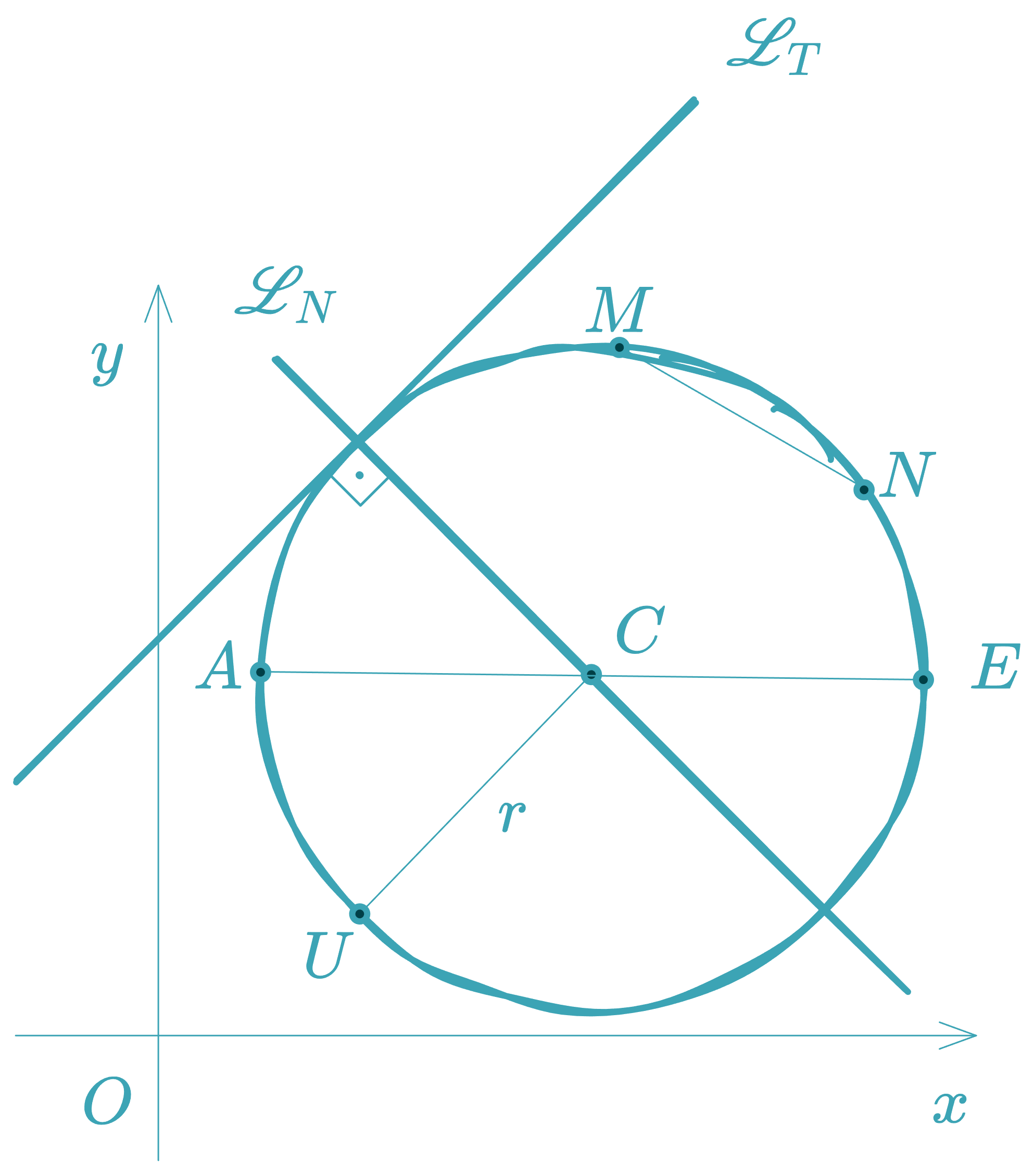
- **Center** ($C$): The fixed interior point from which all points on the circle are equidistant.
- **Radius** ($r = CU$): The distance from the center to any point on the circle.
- **Diameter** ($d$): A chord passing through the center. It satisfies $d = 2r$.
- **Chord** ($\overline{MN}$): A segment joining any two points on the circle.
- **Arc**: A portion of the circumference between two points.
- **Tangent**: A line that intersects the circle at **exactly one point**.
- **Secant**: A line that intersects the circle at **two distinct points**.
Equations of the Circle
1. Standard Form (Center at )
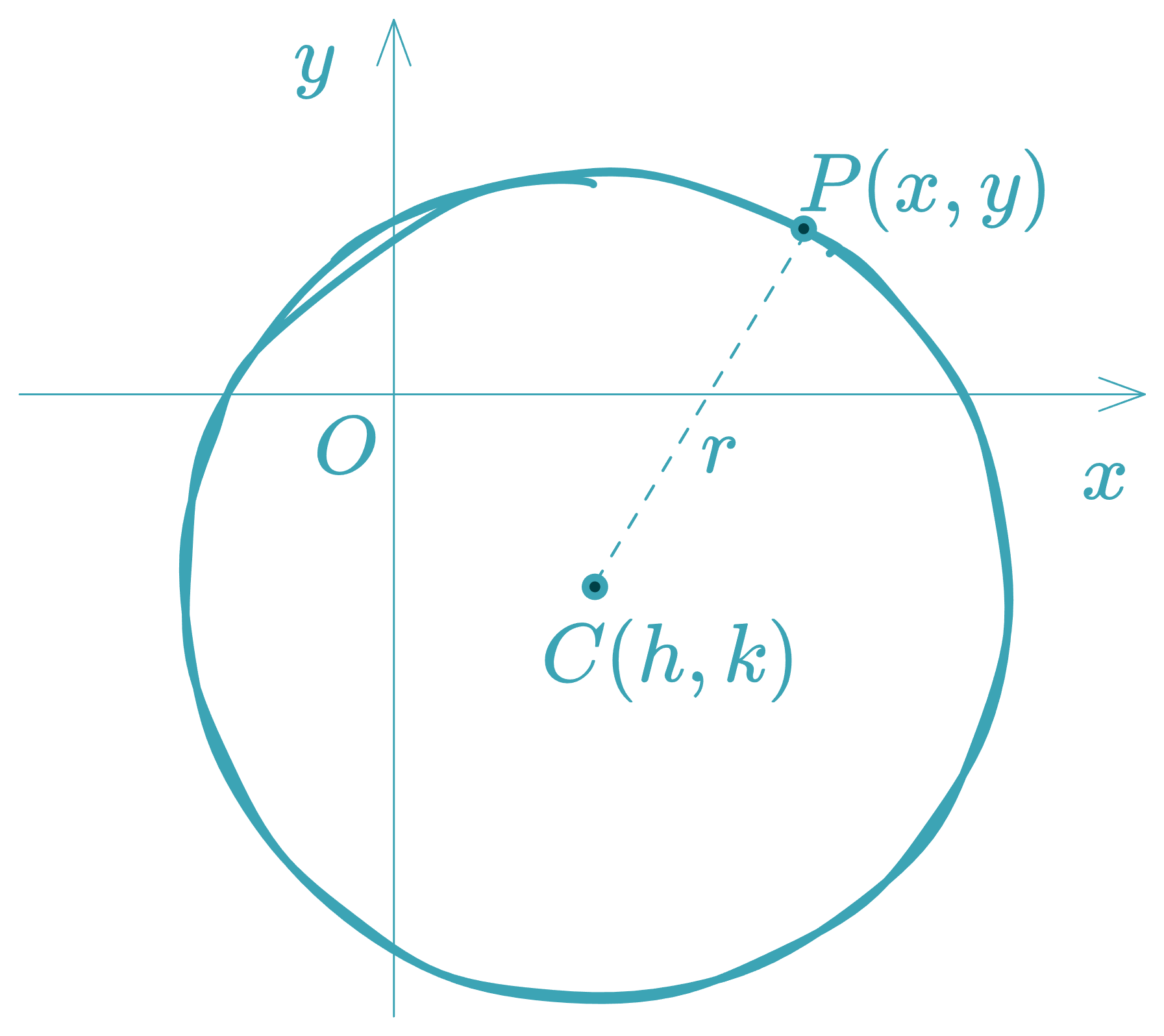
This is the equation of a circle with center and radius .
2. Canonical Form (Center at the Origin)
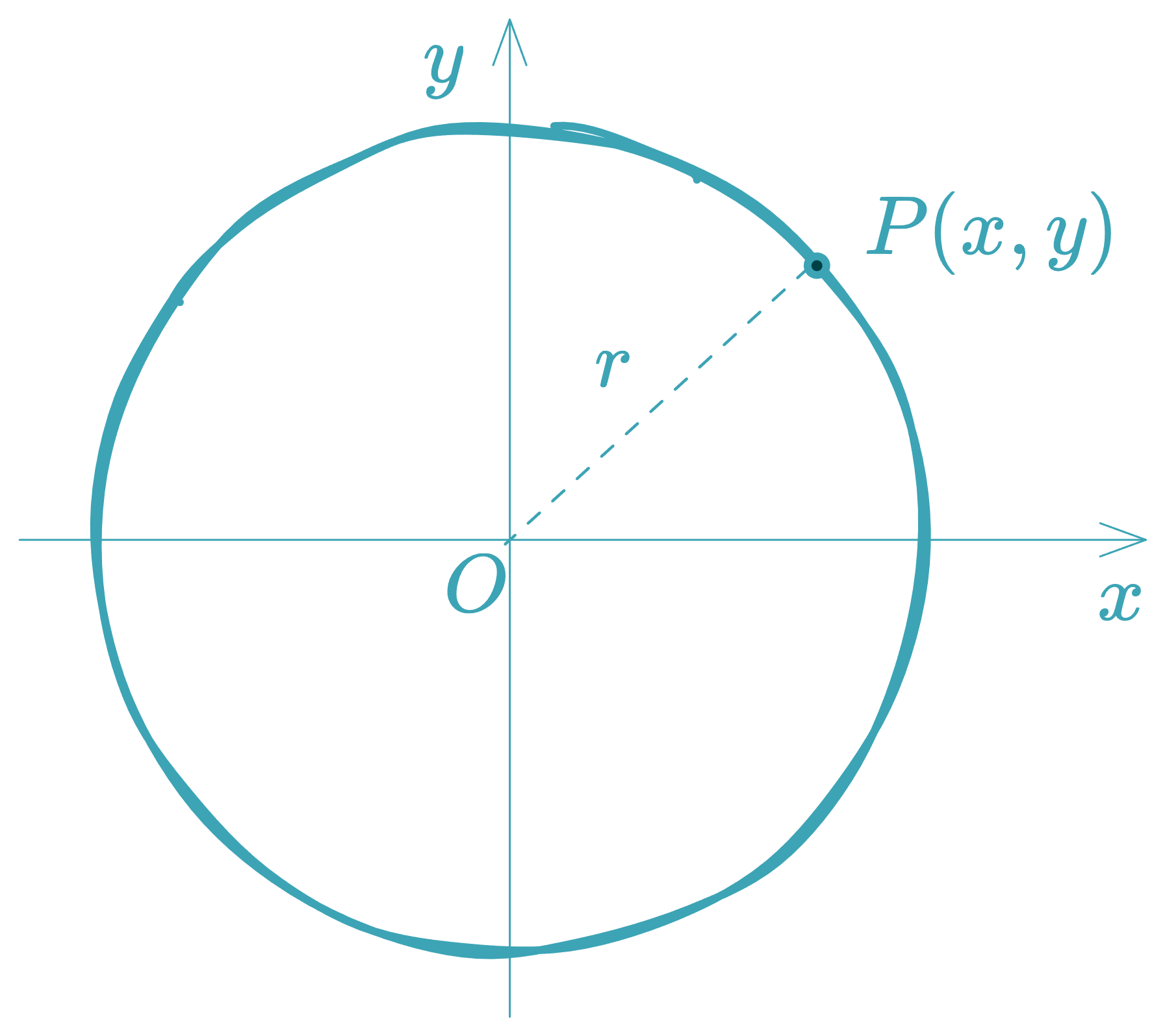
Special cases:
- If : → the unit circle.
- If : → represents only the point .
Circle Tangent to the Coordinate Axes
-
Tangent to the -axis:
Center at , radius →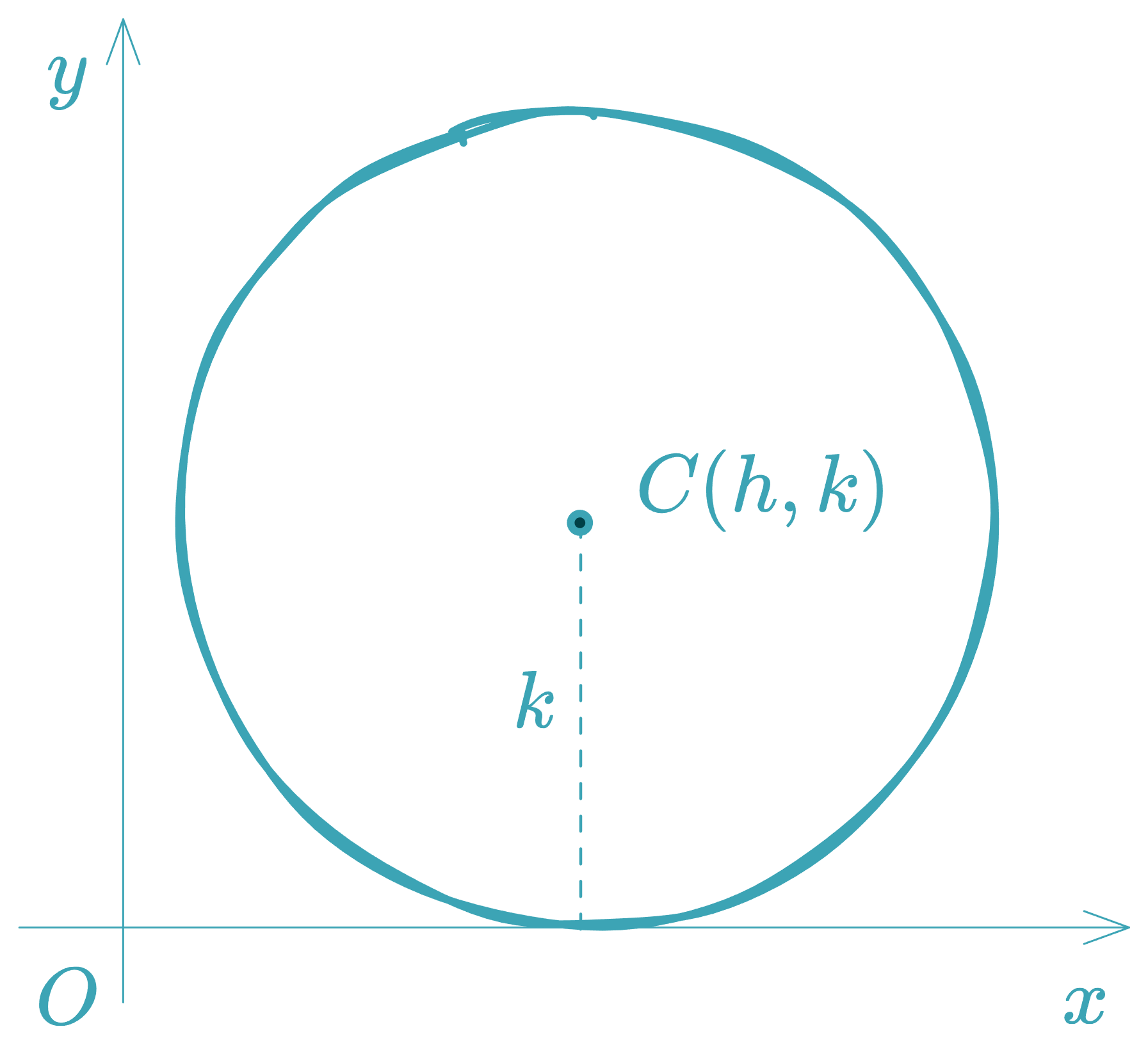
-
Tangent to the -axis:
Center at , radius →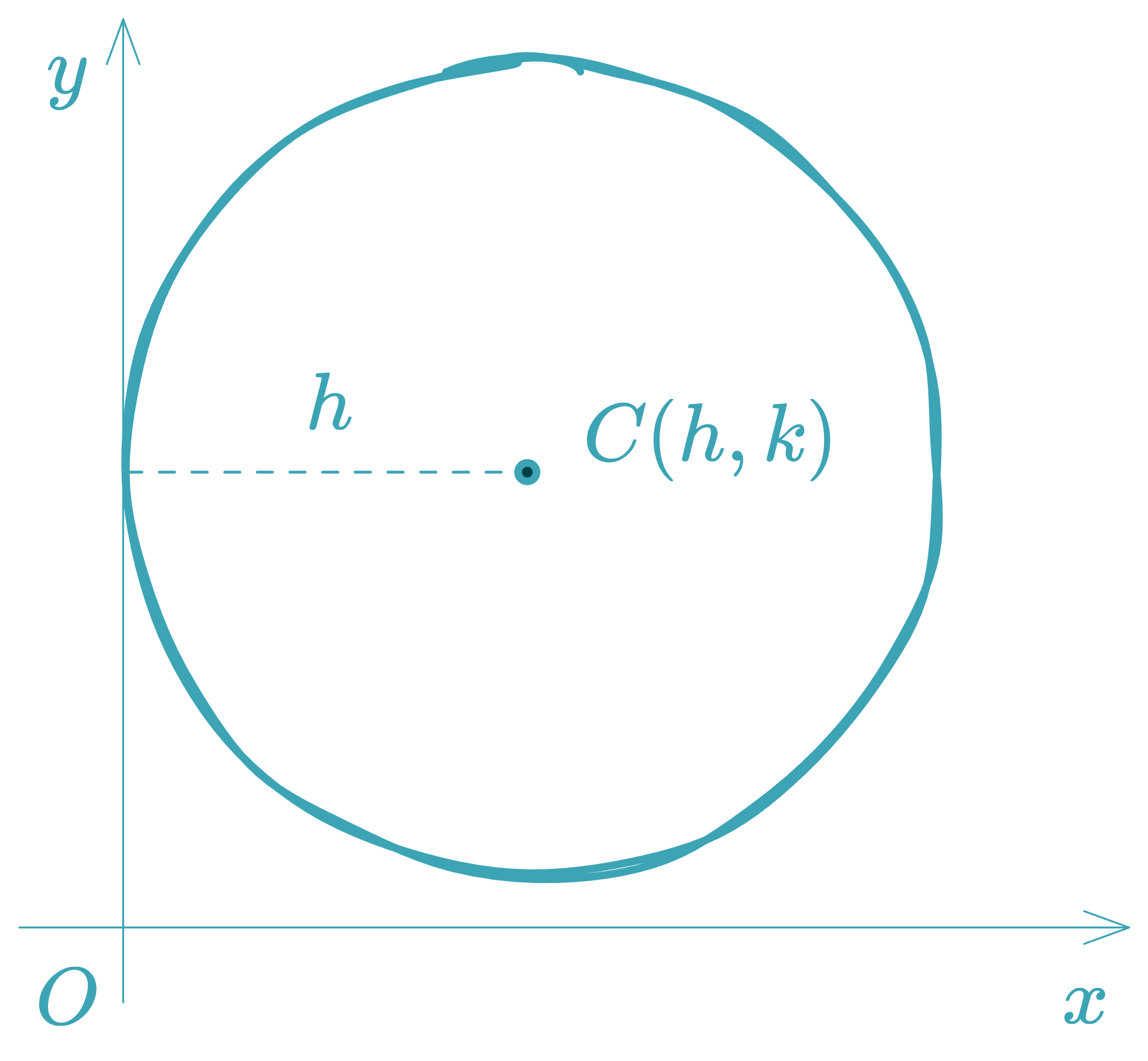
3. Parametric Equations
Given center and radius , any point on the circle can be expressed as:
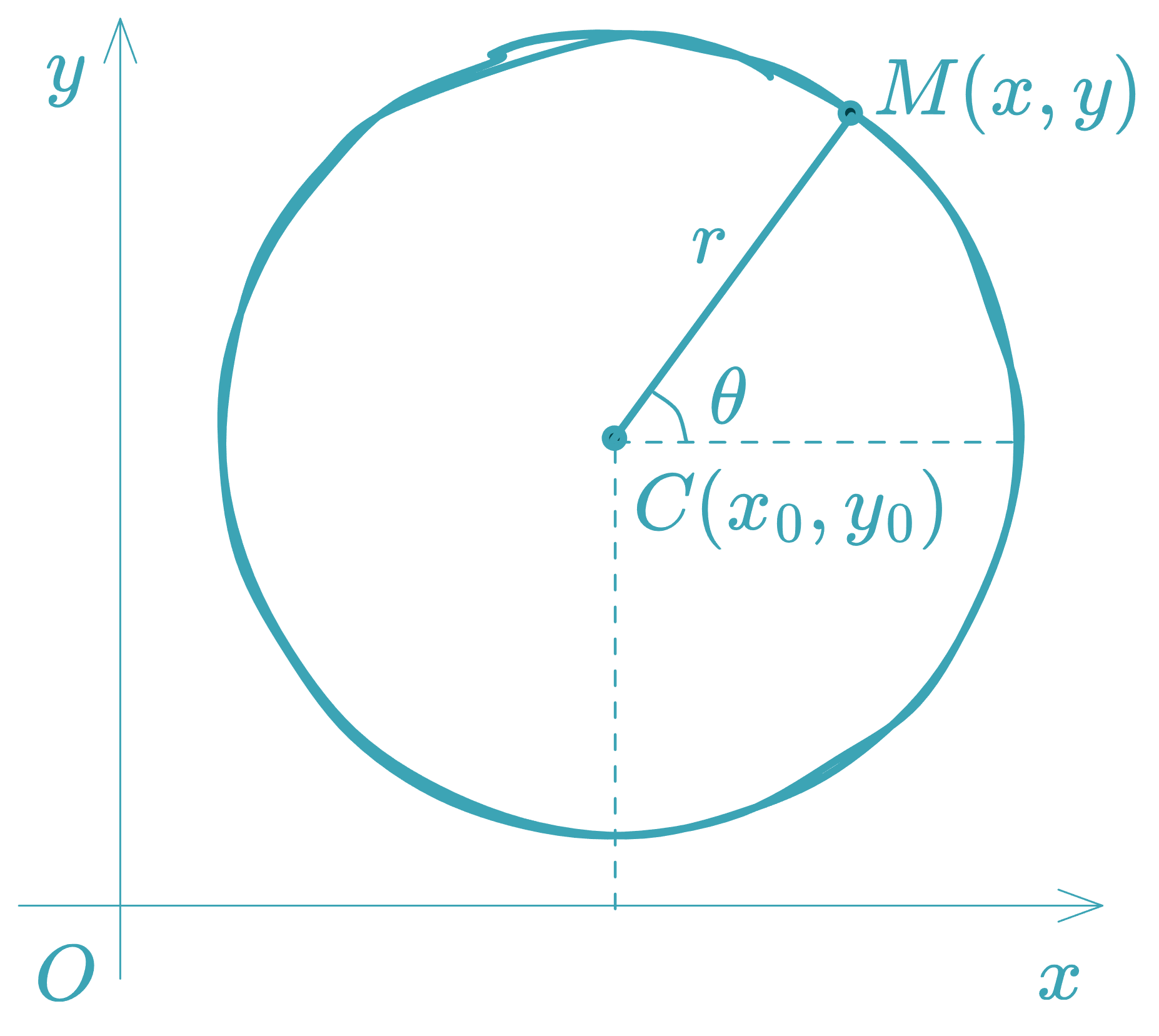
where is the angle measured from the positive -axis.
4. Polar Equation
- General circle (center at , radius ):
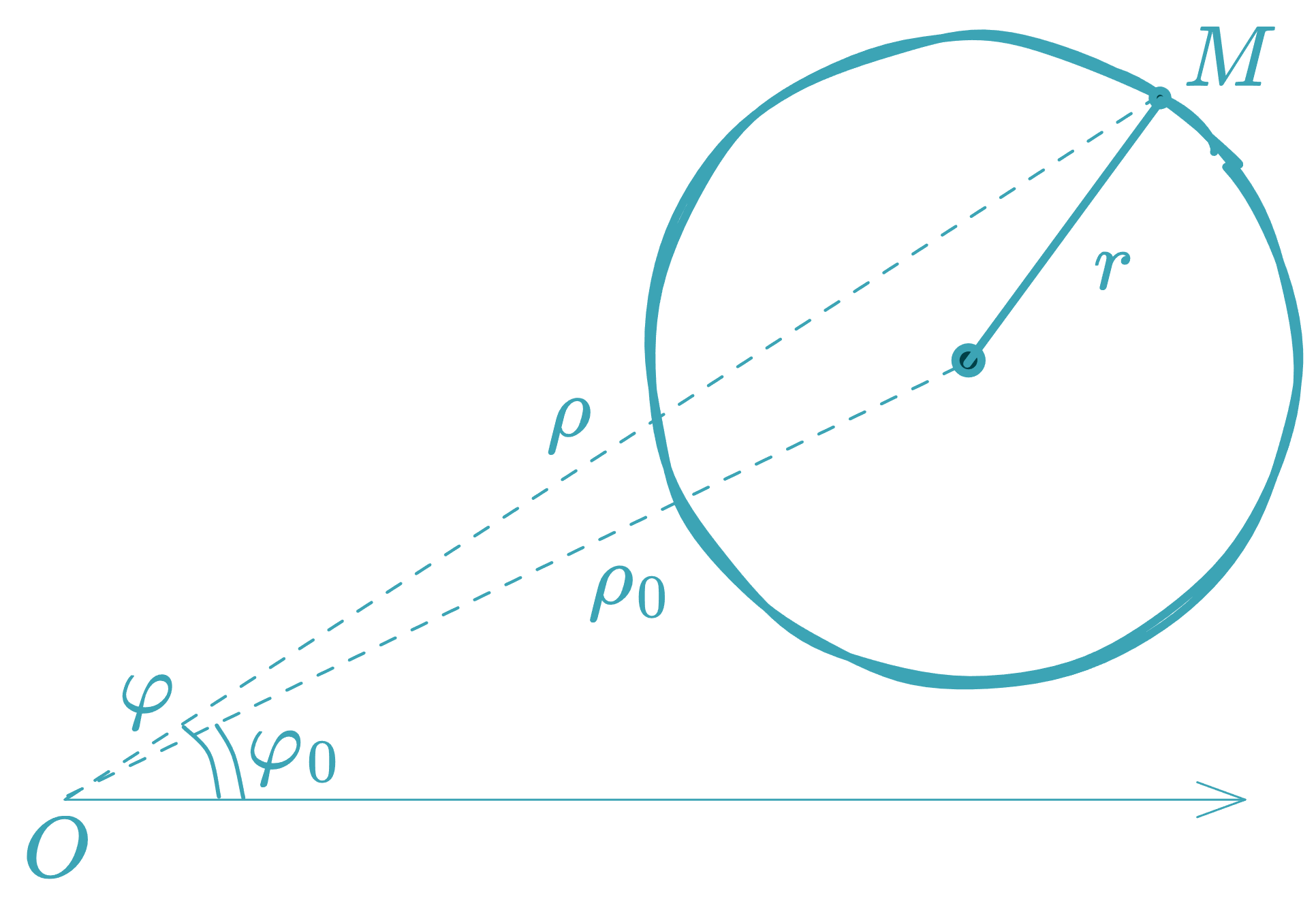
title: Note:
Some texts use a plus sign, but the above form aligns with the Law of Cosines and is preferred for consistency.
- Special case: Circle passing through the pole with center on the polar axis ():
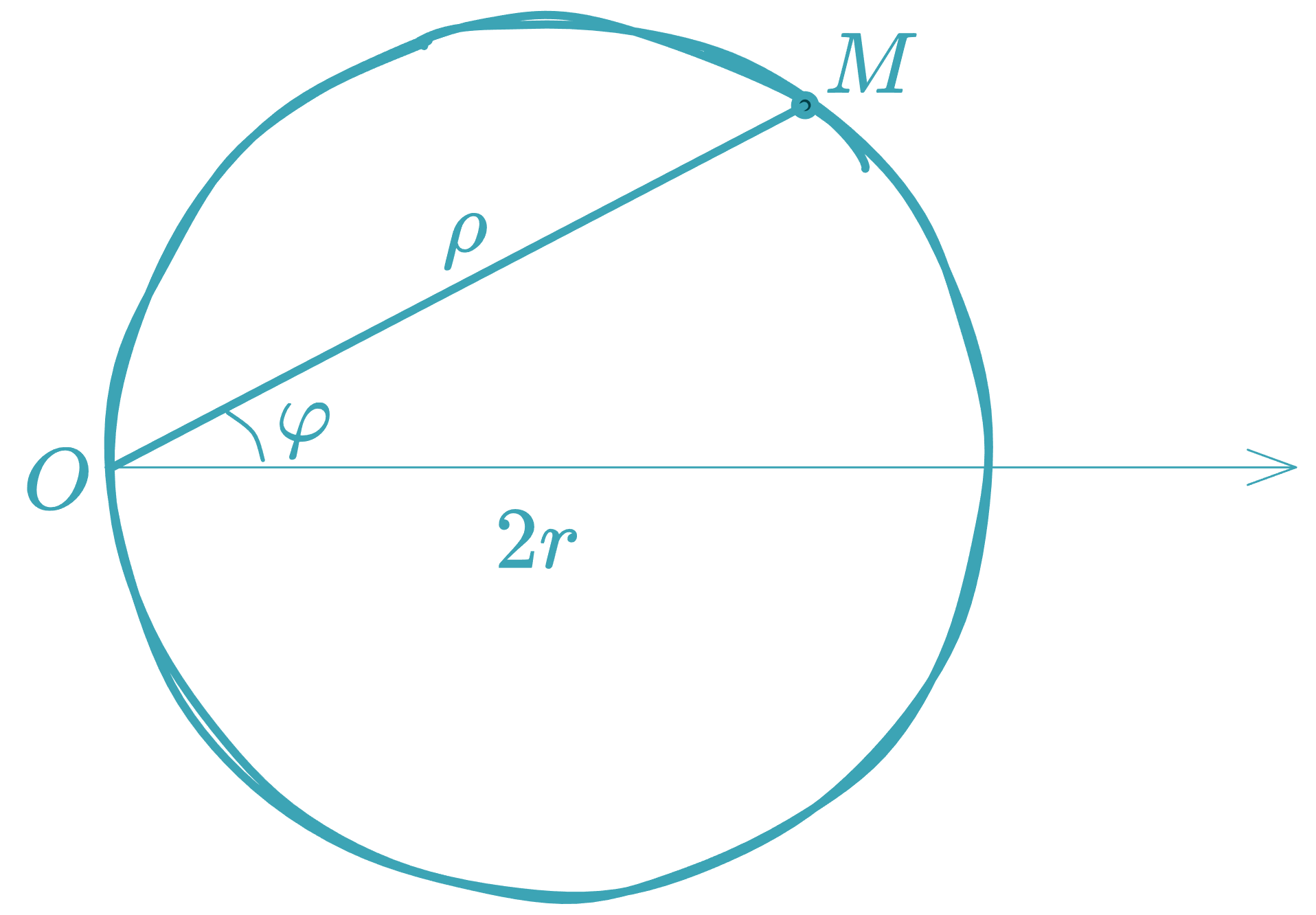
5. General Form of the Equation
- Center:
- Radius:
title: Condition for a real circle
$$\left(\dfrac{D}{2}\right)^2 + \left(\dfrac{E}{2}\right)^2 - F > 0$$
- If the expression equals zero, the equation represents a **point circle**.
- If negative, it represents an **imaginary circle** (no real points).
Determining a Circle
Three independent conditions are required to uniquely determine a circle. Common cases include:
- Three non-collinear points.
- Center and radius.
- Center and a point on the circle.
- Two points and the tangent line at one of them.
- One point and two tangent lines.
Substitute the given conditions into the standard or general form and solve the resulting system of equations.
Families of Circles
Given two circles:
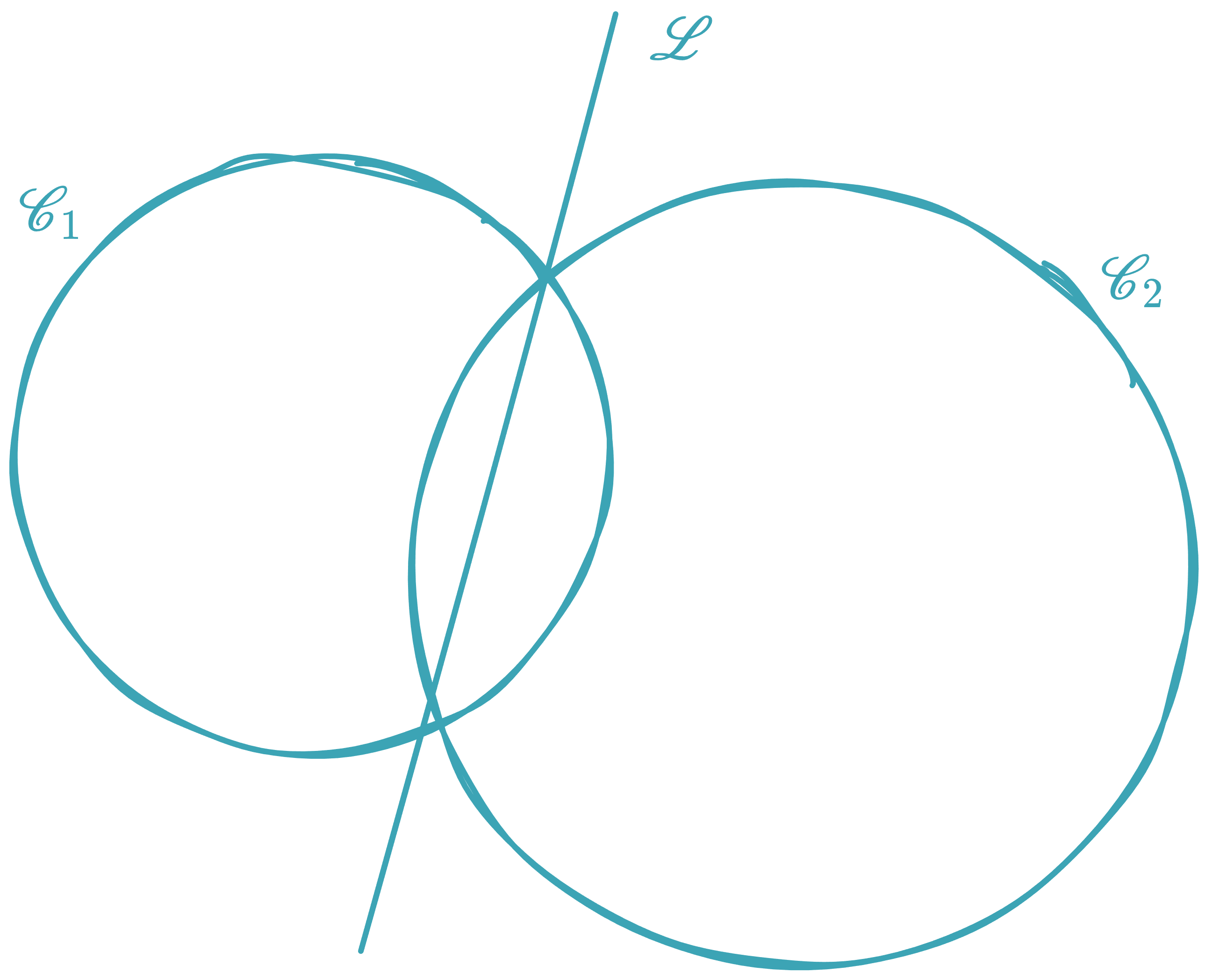
The family of all circles passing through their points of intersection is:
Equivalently:
title: Note:
The equation $\mathscr{C}_1 - \mathscr{C}_2 = 0$ yields the **radical axis**—the straight line containing all points with equal power with respect to both circles.
Tangent Lines to a Circle
1. Tangent at a Point on the Circle
- Circle centered at the origin ():
- Circle with center :
2. Tangency Condition for a Line
Given a line and a circle with center and radius , the line is tangent if and only if the perpendicular distance from the center to the line equals the radius:
Coordinate Transformations
1. Translation of Axes
If the coordinate axes are translated so that the new origin is at , the coordinates relate by:
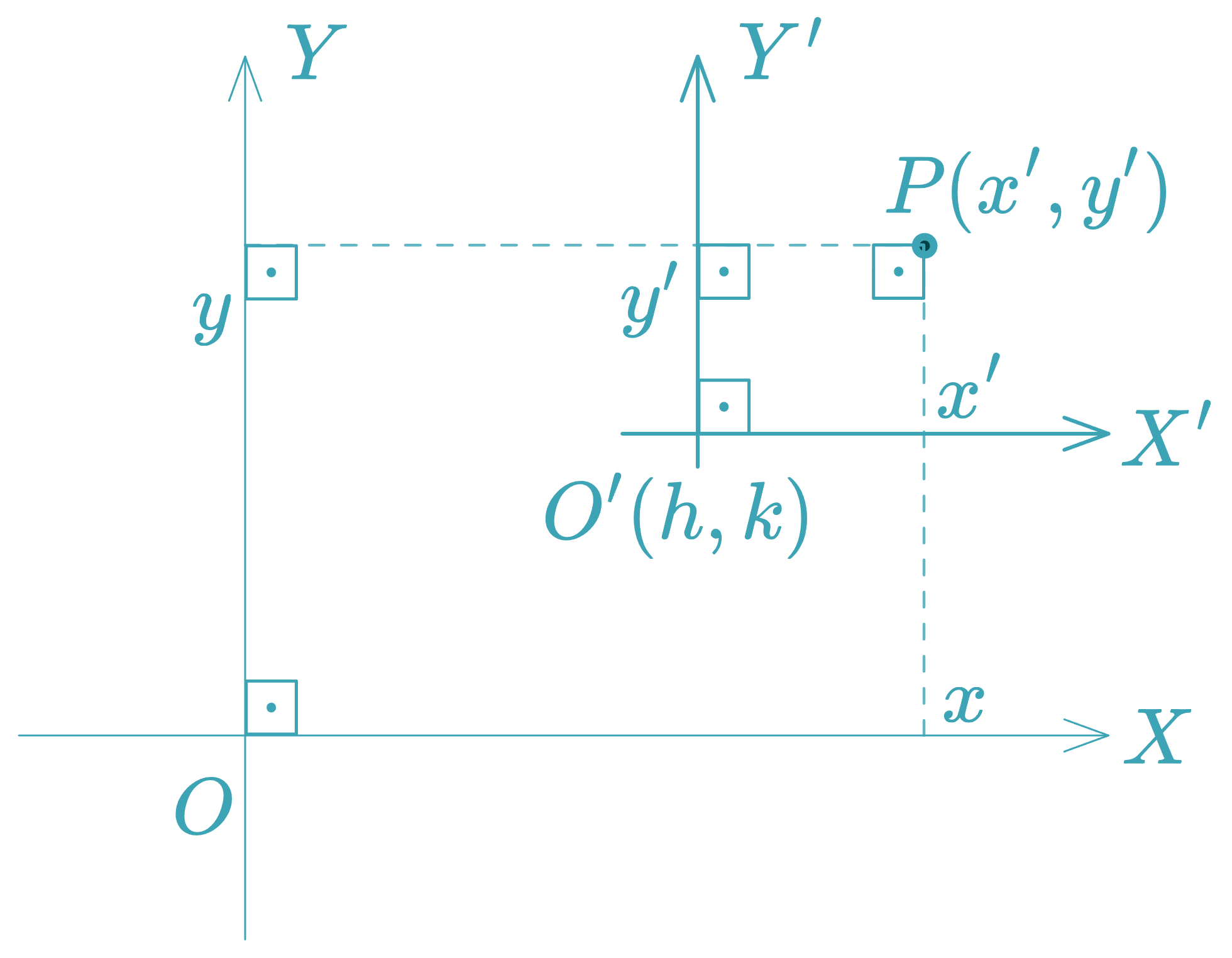
This transformation eliminates linear terms in the general equation, simplifying it to canonical form.
2. Rotation of Axes
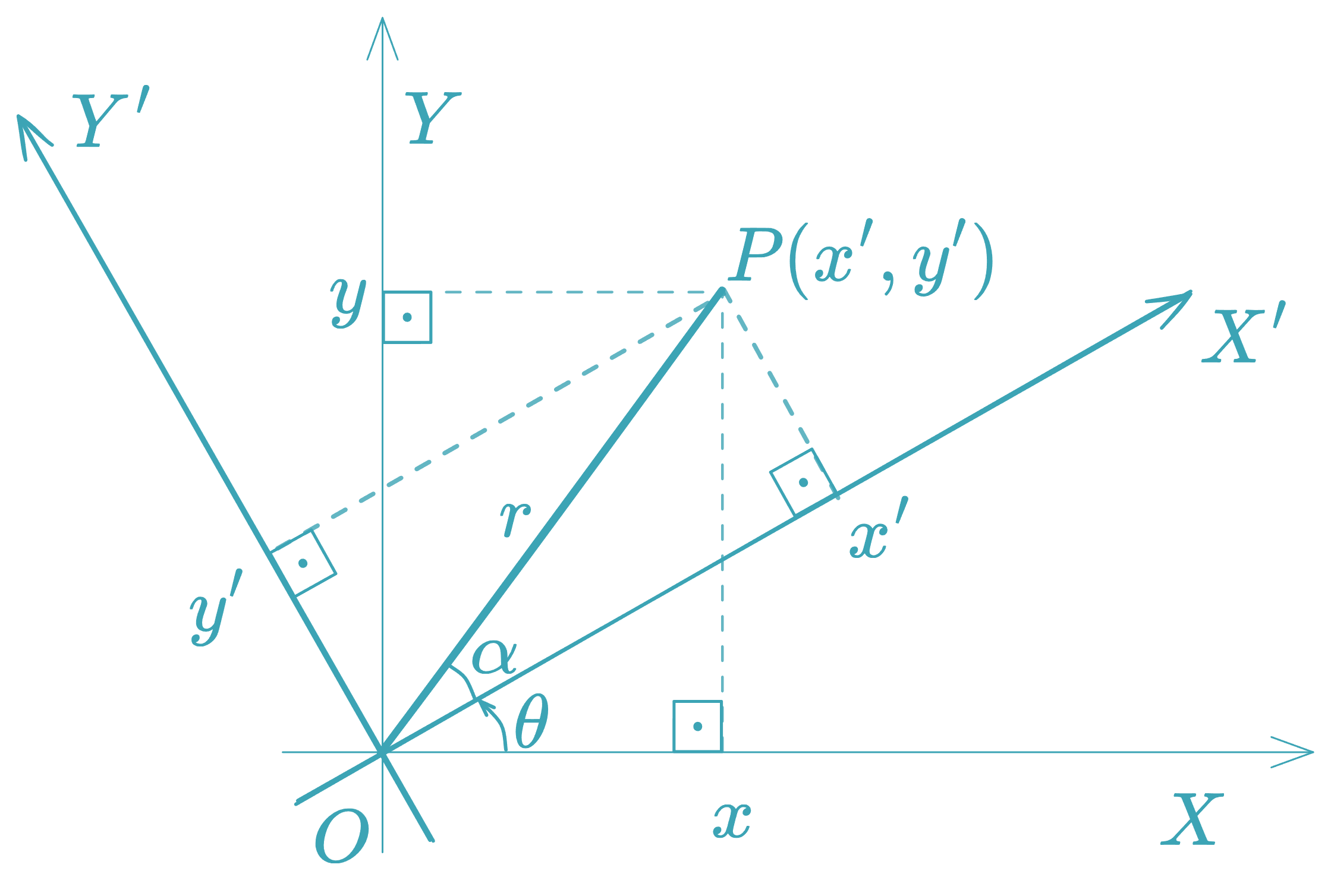
Rotating the axes by an angle relates original and new coordinates by:
3. Eliminating the Term in Conic Sections
For a general quadratic equation
the mixed term is eliminated by rotating the axes through an angle satisfying:
If , then .
title: Note:
Although the **circle never contains an $xy$ term** (due to its rotational symmetry), this technique is essential for analyzing other conic sections and is included here for completeness in the context of coordinate transformations.